

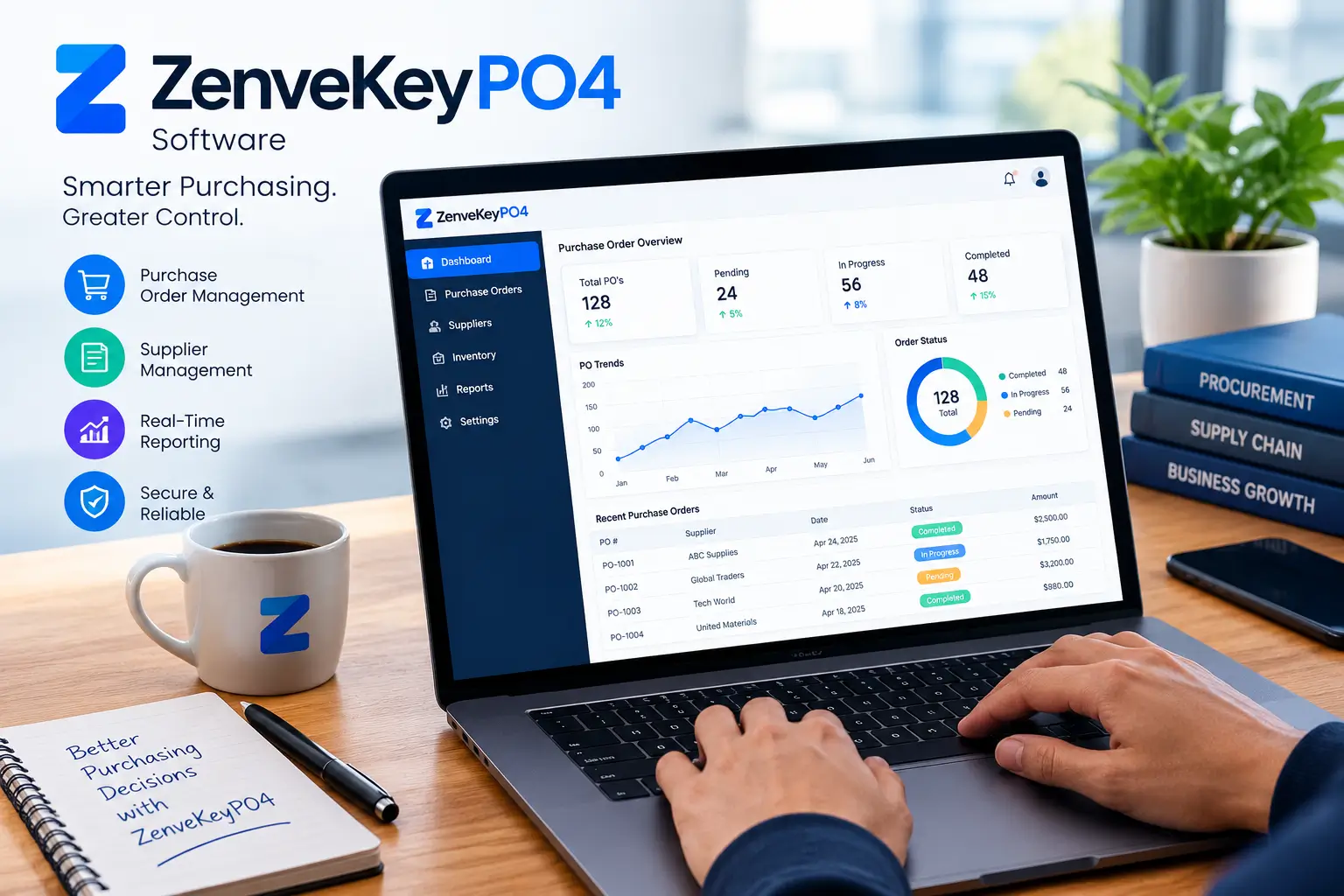
Introduction:
Zenvekeypo4 software is an unusual name that has started appearing in online searches, yet finding a straightforward explanation of what it actually is can be surprisingly difficult. Unlike established applications that normally have a recognizable developer, official documentation, version history, supported operating systems, and clearly published features, Zenvekeypo4 currently has a much less certain public identity. A Zenvekeypo4-branded website exists and discusses software settings, errors, digital activities, and ways of understanding software problems, but its publicly available material does not clearly establish one specific downloadable application behind the name.
The confusion becomes greater because different websites describe the term in completely different ways. Some sources associate Zenvekeypo4 with workflow and productivity functions, while others describe it as a password or access-management tool. Another interpretation connects the name with LiFePO4 battery-management software. These are very different categories, and there is currently no sufficiently authoritative documentation showing that they are all referring to the same product.
That distinction matters for anyone who encounters the name on a computer, inside a browser message, in a download page, or in an error notification. Rather than inventing a feature list or treating every online description as fact, the sensible approach is to examine what can actually be established, understand why the information is inconsistent, and follow safe steps before installing unfamiliar software.
Profile Summary
| Category | Details |
|---|---|
| Keyword | Zenvekeypo4 Software |
| Software Status | Not clearly established as one verified mainstream software product |
| Public Presence | A Zenvekeypo4-branded website exists |
| Official Developer | Not clearly identified in publicly available information |
| Primary Purpose | Unclear; different sources describe different uses |
| Reported Use #1 | Workflow and productivity management |
| Reported Use #2 | Task and process automation |
| Reported Use #3 | Password or credential management |
| Reported Use #4 | Access and key management |
| Reported Use #5 | LiFePO4 battery-management/monitoring |
| Verified Feature List | Not currently available from a clearly authoritative product source |
| Official Documentation | Not sufficiently established |
| Version History | No consistently verified public release history |
| Official Installer | No clearly verified installer established |
| Supported Platforms | Not reliably confirmed |
| Pricing | Not reliably confirmed |
| Security Status | Cannot be conclusively certified from available information |
| Download Recommendation | Avoid unidentified or unofficial installers |
| Browser Popup Risk | A popup mentioning the name does not prove software is installed |
| Unknown Installation | Check publisher, installation date, file location, and security status |
| Sensitive Information | Do not enter passwords, financial details, API keys, or private credentials into unverified software |
| Troubleshooting Approach | First determine where the Zenvekeypo4 name appeared |
| Safety Approach | Verify source and publisher before opening or installing files |
| Third-Party Claims | Conflicting and should be treated as unverified |
| Best Practice | Rely on identifiable developer documentation rather than speculative feature lists |
| Overall Assessment | Use caution until the software’s identity and official source can be independently verified |
What Is Zenvekeypo4 Software?
The most accurate description of Zenvekeypo4 software at present is that it is an inconsistently documented software-related name. There is evidence of a website using the Zenvekeypo4 name, and that website presents itself as a source of information about software, settings, errors, and technical problems. Its stated purpose is to make software-related information easier for users to understand. However, the available pages do not clearly identify a conventional software publisher or provide enough technical information to establish a single, well-defined commercial application.
That may sound like a small distinction, but it changes how the term should be interpreted. When a recognized software product is discussed, users can normally verify its identity through a developer name, official product page, installation package, documentation, version numbers, licensing information, support channels, and release history. Those details help establish whether two references are describing the same application. With Zenvekeypo4, that chain of verification is currently incomplete.
Why the Name Is Confusing
One reason for the confusion is the variety of descriptions appearing online. Some articles portray Zenvekeypo4 as a workflow, productivity, or automation application. Such descriptions mention possibilities such as task organization, data management, process automation, dashboards, and collaboration. However, these should be treated as third-party descriptions rather than confirmed specifications.
Other sources take the name in an entirely different direction. One interpretation presents it as a password or credential-management utility, while another associates ZenvekeyPO4 with LiFePO4 battery systems. The latter interpretation is particularly interesting because the “PO4” portion of the name resembles part of the chemical notation used when discussing lithium iron phosphate batteries. Even so, a resemblance in terminology does not establish that a genuine software product exists for that purpose.
The safest conclusion is therefore not that Zenvekeypo4 definitely performs one particular task, but that the name has been used in multiple online contexts without a consistent, independently verified product identity.
What Information About Zenvekeypo4 Can Actually Be Verified?
A useful way to approach unfamiliar software is to separate existence of a name from verification of a product. In this case, a Zenvekeypo4-branded website is publicly accessible and contains pages discussing software-related information. The site’s main software page was published in July 2026, while its About page describes an objective of helping users understand software problems, settings, errors, and digital activities.
What remains unclear is whether that website is the official developer or publisher of a specific software application called Zenvekeypo4. The reviewed material does not provide the sort of conventional product evidence that would normally settle the question, such as a clearly identified development company, verified installer, detailed technical documentation, release history, supported operating systems, or a formal product specification.
This is why claims found on other websites should be handled carefully. A page describing a feature does not automatically prove that the feature exists. Likewise, an article mentioning a price does not establish official pricing unless the information can be traced to an identifiable publisher.
A Useful Verification Checklist
If you encounter Zenvekeypo4 on a computer or online, begin by asking a few basic questions. Who published the software? Where did the installer come from? Does the file have a recognizable publisher signature? Is there a version number? Is there a legitimate privacy policy and licensing agreement? Does the software appear in the operating system’s installed-app list? Are there reliable technical documents explaining what it does?
The answers can tell you far more than a generic article claiming that Zenvekeypo4 has a particular feature.
For example, suppose a file named “Zenvekeypo4Setup.exe” suddenly appears in a Downloads folder. The filename alone does not prove that it belongs to a legitimate application. You would want to determine where the file came from, whether you intentionally downloaded it, who signed it, when it was created, and what security software reports about it.
The same principle applies if the name appears in a browser notification. A browser message containing the word Zenvekeypo4 does not necessarily mean that Zenvekeypo4 software is installed on the computer. It could simply be text displayed by a webpage or notification service. Treating every browser message as proof of an installed application can lead to unnecessary downloads and potentially risky decisions.
Possible Uses and Why They Should Not Be Assumed
Several online descriptions attempt to assign a specific purpose to Zenvekeypo4. One group of sources presents it as workflow or productivity software, suggesting that it could theoretically help organize tasks, automate repetitive processes, manage information, or bring several activities into one workspace. Another set of descriptions discusses key and credential management. Yet another connects the term with battery monitoring.
These descriptions are useful for understanding what people are claiming, but they should not be presented as confirmed functionality. A responsible software guide has to distinguish between a documented capability and a possibility inferred from third-party articles.
If Zenvekeypo4 were genuinely a workflow application, for example, a legitimate product page would normally explain which tasks it supports, whether automation requires scripts or visual workflows, which services it integrates with, and whether data is stored locally or in the cloud. Without such documentation, a reader cannot responsibly assume that those capabilities exist.
The Password and Credential-Management Interpretation
The password-management interpretation deserves particular caution because software that handles credentials has a much higher security burden than an ordinary productivity application. A genuine credential-management platform would need to explain how passwords, API keys, access tokens, encryption keys, or other secrets are stored and protected.
Users should never enter real passwords, production API credentials, banking information, private keys, or other sensitive information into an unfamiliar application merely because an online article describes it as a security tool. Security claims should be supported by transparent documentation, identifiable ownership, clear privacy practices, and trustworthy technical information.
The LiFePO4 Interpretation
The LiFePO4 interpretation is another example of why context matters. Some online material associates ZenvekeyPO4 with battery-management functions, including information such as voltage, current, temperature, state of charge, and battery condition. Those functions are plausible for battery-management software generally, but the available evidence does not establish them as verified Zenvekeypo4 capabilities.
If someone encounters the term while working with a lithium iron phosphate battery system, the correct approach would be to identify the battery manufacturer, battery-management-system model, controller, and accompanying documentation rather than assuming that any application using the Zenvekeypo4 name is appropriate.
The difference is especially important with hardware. An incorrect monitoring or configuration tool can potentially provide misleading readings or inappropriate settings. Battery-related software should therefore be verified against the hardware manufacturer’s documentation before use.
Zenvekeypo4 Software Problems and Safe Troubleshooting
People searching for “Zenvekeypo4 software problem” may expect a standard troubleshooting guide containing known error codes and official fixes. At present, that assumption is difficult to support. Publicly available information does not provide a reliable, centralized database of Zenvekeypo4 errors, and recent sources themselves emphasize that the software’s identity and technical specifications remain unclear.
The best troubleshooting strategy is therefore to begin with the context in which the name appeared. Was it an installed application? A Windows process? A browser notification? A downloaded file? A popup? A log entry? A message from another application? Each possibility requires a different investigation.
If Zenvekeypo4 Appears as a Browser Popup
A sudden browser message deserves particular caution. If a page displays an urgent warning and tells you to download a program, call a phone number, install an extension, or allow notifications to “fix” the problem, do not automatically follow those instructions.
Close the suspicious tab or browser window instead. If notifications were previously allowed for an unfamiliar site, remove that site’s notification permission from the browser settings. Then run a security scan using a trusted security product already installed on the device.
The reason for this approach is simple: a webpage can display almost any text it wants. Seeing a strange software name inside a popup does not establish that the operating system has detected a genuine application problem.
If an Unknown Program Is Actually Installed
If Zenvekeypo4 appears in your installed applications, investigate before removing or opening it. Check its publisher, installation date, file location, version information, and whether you recognize installing it.
If you never intentionally installed it, avoid launching it merely to “see what it does.” Instead, scan the installation files with reputable security software and investigate how it arrived on the system.
If the application appears suspicious and you have confirmed that it is not required by a legitimate program you use, uninstalling it through the operating system’s normal application-management tools may be appropriate. For more serious concerns, especially if the machine is behaving unusually, a complete security scan is preferable to downloading an unknown “repair utility.”
Is Zenvekeypo4 Software Safe to Download?
There is not enough reliable evidence to give Zenvekeypo4 a blanket safety certification. At the same time, it would also be excessive to declare that every file carrying the name is automatically malware. The available evidence supports a more measured position: the identity of the software is insufficiently verified, so users should treat downloads using the name with caution.
Several recent articles specifically warn against downloading unknown installers associated with the term. Other sources similarly recommend checking the publisher, download source, permissions, and security warnings before interacting with unfamiliar software.
This distinction is valuable because unfamiliar software names can become associated with misleading download pages even when the original source of the name is harmless. A user searching for a mysterious program may encounter a page offering a “fix,” “updated version,” or “official installer.” The page may look professional while offering no reliable evidence that its file comes from a legitimate developer.
What to Check Before Installing Anything
Before installing a program associated with Zenvekeypo4, examine the publisher information first. A legitimate installer should give you enough information to identify who created and distributed it. Look at the file’s digital signature where available, check whether your security software flags it, and verify that the download source is trustworthy.
Do not disable antivirus protection simply because an installer says it is required. Do not bypass operating-system security warnings without understanding why they appeared. Do not enter payment information or account passwords into an unfamiliar program merely because a webpage claims that doing so is necessary for activation.
A good rule is straightforward: if you cannot establish who made the software, what it does, and why you need it, there is little reason to install it.
Why “Fix Zenvekeypo4” Downloads Deserve Extra Attention
Searches for a software problem can create a particularly vulnerable moment. Someone who sees an error may be anxious to restore their computer quickly. A malicious or deceptive website can exploit that urgency by presenting a fake solution.
That is why users should avoid downloading a random “Zenvekeypo4 repair tool” from an unknown website. If the underlying software itself cannot be clearly identified, an unofficial repair utility claiming to fix it deserves even greater scrutiny.
The safer process is to identify the original source of the error first. If the name came from a known application, troubleshoot that application. If it came from a browser popup, address the browser notification or suspicious webpage. If it came from a system log, investigate the actual process or event that generated the entry.
How to Approach Zenvekeypo4 in the Future
The biggest lesson from Zenvekeypo4 is not about one mysterious software name. It is about how to evaluate unfamiliar technology when reliable information is limited. A strange name can easily attract confident explanations online, but confidence is not the same thing as evidence.
When information conflicts, return to primary evidence. Look for an identifiable developer, official documentation, release history, verified downloads, clear licensing terms, and consistent technical specifications. If those elements are missing, keep the conclusion appropriately limited.
Zenvekeypo4 may eventually turn out to be a legitimate niche application, an internal tool, a development project, an incorrectly remembered name, or something entirely different. The current public record is simply not strong enough to choose one explanation with confidence.
A Practical Five-Step Approach
First, identify exactly where you encountered the term. Write down the application, webpage, file, or message in which it appeared.
Second, check whether you deliberately installed anything connected with that name. An unexpected appearance is more concerning than a name associated with software you knowingly installed.
Third, verify the publisher and source. Do not rely solely on the filename or the appearance of a download page.
Fourth, scan suspicious files before opening them. If a security product raises an alert, do not override it simply because an article promises that the file will solve the problem.
Finally, avoid sharing sensitive information with an unverified service. Passwords, financial information, API credentials, private keys, and business data should only be entrusted to software whose identity and security practices can be established.
Conclusion
Zenvekeypo4 software remains difficult to define because publicly available information does not point to one consistently documented product. A Zenvekeypo4-branded website exists and discusses software-related issues, but it does not currently provide enough evidence to establish a conventional software product with a clearly verified developer, installer, feature set, or release history. Meanwhile, third-party sources describe the term in several incompatible ways, including workflow software, credential management, access control, and LiFePO4 battery management.
That uncertainty is the most important fact for users. Rather than accepting an impressive feature list or downloading a mysterious “fix,” investigate where the name appeared and verify the source behind it. An unfamiliar software name is not automatically dangerous, but insufficient verification is a good reason to slow down.
Until authoritative documentation establishes exactly what Zenvekeypo4 is, the safest position is to treat specific claims about its features, pricing, compatibility, security, and installation requirements as unconfirmed. Careful verification is more useful than speculation, especially when software may have access to personal information, system files, credentials, or connected hardware.
Frequently Asked Questions
1. What is Zenvekeypo4 software?
Zenvekeypo4 software is currently best described as an inconsistently documented software-related term. A website using the Zenvekeypo4 name exists, but publicly available information does not clearly establish one mainstream application with a verified developer and complete technical documentation.
2. Is Zenvekeypo4 software a real program?
A Zenvekeypo4-branded website is real and publishes information about software-related topics. However, that does not by itself prove that there is a fully documented downloadable application called Zenvekeypo4. The exact status of a specific software product remains unclear.
3. What does Zenvekeypo4 software do?
There is no single verified answer. Different online sources associate the name with workflow automation, productivity, credential management, access control, and LiFePO4 battery monitoring. These descriptions conflict and should not be treated as confirmed features.
4. Is Zenvekeypo4 software safe?
Its safety cannot currently be confirmed with confidence because the product’s identity, developer, and official distribution channel are not sufficiently established. Users should verify the publisher, source, file signature, permissions, and security warnings before installing anything carrying the name.
5. Can I download Zenvekeypo4 software?
A clearly verified official download source has not been established from the reviewed information. Users should avoid random installers, cracked versions, browser extensions, or “repair tools” claiming to be official Zenvekeypo4 software.
6. Is Zenvekeypo4 a password manager?
Some third-party material describes the name in connection with password or credential management, but that functionality has not been independently established as an official feature of a clearly identified Zenvekeypo4 product.
7. Is Zenvekeypo4 related to LiFePO4 batteries?
Some online sources associate ZenvekeyPO4 with LiFePO4 battery-management software. However, this is one of several conflicting interpretations of the name, so the connection should not be treated as confirmed without documentation from an identifiable manufacturer or developer.
8. What should I do if I see a Zenvekeypo4 popup?
Do not immediately download anything or provide personal information. Close the suspicious page, review browser notification permissions, and run a security scan if necessary. A browser popup using the Zenvekeypo4 name does not automatically mean the software is installed on your computer.
9. What if Zenvekeypo4 appears in my installed programs?
Check its publisher, installation date, location, version, and whether you remember installing it. If the application is unfamiliar, scan it with trusted security software before opening it. Avoid downloading an unrelated “fix” from an unknown website.
10. Should I trust online articles claiming to explain Zenvekeypo4?
Treat them as sources of claims rather than automatic proof. Current articles disagree substantially about what Zenvekeypo4 supposedly is. The most reliable approach is to look for identifiable first-party documentation and verify the developer, software version, download source, and security information before taking action.
You May Read Also:
Geometry Learn V3: Mastering Shapes, Angles, and Spatial Thinking Through Interactive Practice

1 Comment
Pingback: Elon Musk Neuralink – Inside the Brain-Computer Interface Revolution 2026