

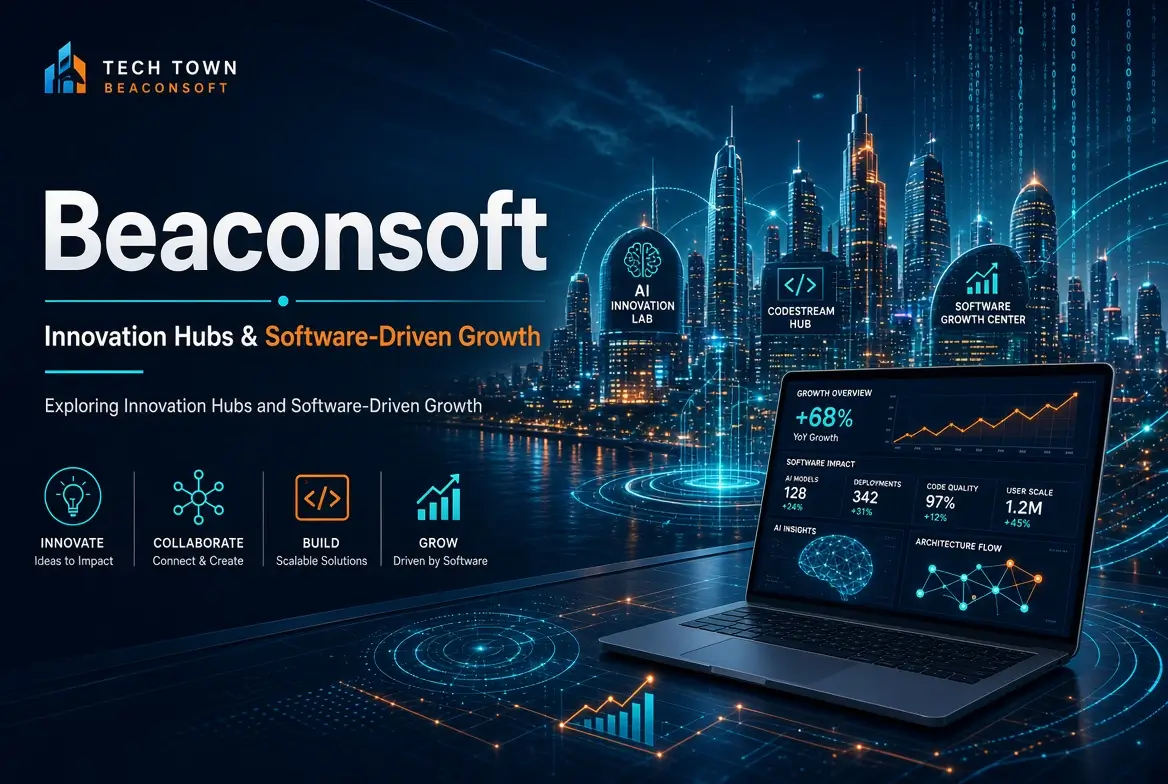
Technology rarely advances in isolation. Behind many successful digital products sits a mix of skilled people, shared workspaces, mentoring networks, and practical software tools that turn ideas into working systems. The phrase “tech town beaconsoft” brings together two related strands: the concept of a concentrated technology community or innovation hub, and the software capabilities that help those communities function and grow. While the exact combination does not point to a single widely recognized brand, it usefully frames a broader conversation about how physical and digital infrastructure support modern tech activity.
Innovation districts, accelerator campuses, and software-focused resource centers have become important features of many cities. They provide more than desks and Wi-Fi. They create environments where founders, developers, and operators can access knowledge, talent, and tools in closer proximity than they would in fully distributed settings. At the same time, specialized software platforms—whether for development, fraud protection, analytics, or collaboration—act as the operational backbone that allows work inside those spaces to move forward efficiently. This article examines the role of such hubs, the kinds of software support that matter most, and the practical considerations for teams and individuals who want to benefit from them. Tech Town Beaconsoft.
The Role of Technology Innovation Hubs
Tech Town Beaconsoft concentrated technology spaces serve several distinct purposes. They lower the barrier to entry for early-stage teams by offering flexible workspace, shared amenities, and exposure to peers facing similar challenges. Regular programming—workshops, office hours, demo days, and informal meetups—helps transfer practical knowledge that is difficult to acquire in isolation. Proximity also makes serendipitous conversations more likely, which can lead to hiring, partnerships, or simply clearer thinking about a product decision.
Many of these hubs deliberately mix startups with more established companies, service providers, and sometimes university or research affiliates. The resulting diversity of experience can be valuable. A first-time founder might gain insight from someone who has already scaled a similar product, while a larger organization might spot emerging talent or new approaches. The physical concentration of activity also makes it easier for external partners, investors, and corporate innovation teams to engage with multiple groups in a single visit.
Success is not automatic.Tech Town Beaconsoft the most effective hubs maintain a clear focus, enforce reasonable standards for participation, and continuously refresh their programming. Spaces that become purely real-estate plays or that lack active curation tend to lose energy over time. Those that treat community building and knowledge exchange as core functions usually produce stronger outcomes for the people who work inside them.
Software Tools That Support Hub-Based Work
Inside any active technology community, Tech Town Beaconsoft plays a quiet but essential role. Version control, project tracking, communication platforms, and cloud infrastructure form the basic operating system of collaborative digital work. Beyond these fundamentals, more specialized tools address recurring needs: protecting advertising budgets from bot traffic, analyzing user behavior, managing customer relationships, or automating repetitive operational tasks.
The value of these tools increases when they reduce friction rather than adding new layers of complexity. Teams working in shared environments often move quickly between conversations, prototypes, and customer feedback. Software that requires heavy configuration or creates isolated data silos can slow that rhythm. Conversely, platforms that integrate cleanly with common workflows and surface useful information without constant manual effort tend to be adopted more readily.
Tech Town Beaconsoft some software categories are especially relevant to the kinds of companies that cluster in innovation hubs. Early-stage product teams need reliable ways to capture feedback and iterate. Growth-oriented companies watch acquisition channels closely and benefit from tools that improve the quality of traffic and data. Operations-focused groups look for automation that frees people from routine coordination work. Matching the toolset to the actual stage and priorities of the team remains more important than collecting the longest feature list.
Who Benefits from Combined Physical and Digital Support
Tech Town Beaconsoft early-stage founders often gain the most immediate value from well-run innovation spaces. Access to mentors, peer feedback, and occasional introductions can compress learning cycles that would otherwise take much longer. Shared facilities also reduce the fixed costs of maintaining a private office during periods when cash is tight and headcount is small. When these physical advantages are paired with practical software that helps the team stay organized and focused, the overall environment becomes more conducive to progress.
Growing companies use hubs differently. They may maintain a presence for recruiting, partnership development, or specific project teams while keeping core operations elsewhere. For these groups, the software layer often matters more than the real estate. Tools that improve visibility across distributed work, protect marketing spend, or streamline internal processes deliver compounding returns as the organization scales.Tech Town Beaconsoft the hub then functions as a node in a larger network rather than the primary workplace.
Individual practitioners—freelance developers, designers, analysts, and consultants—also find value in these ecosystems. Regular exposure to new problems and new collaborators can expand both skills and opportunity. Software that supports independent work while allowing easy collaboration with hub-based teams helps these individuals participate without needing to join a single company full-time.
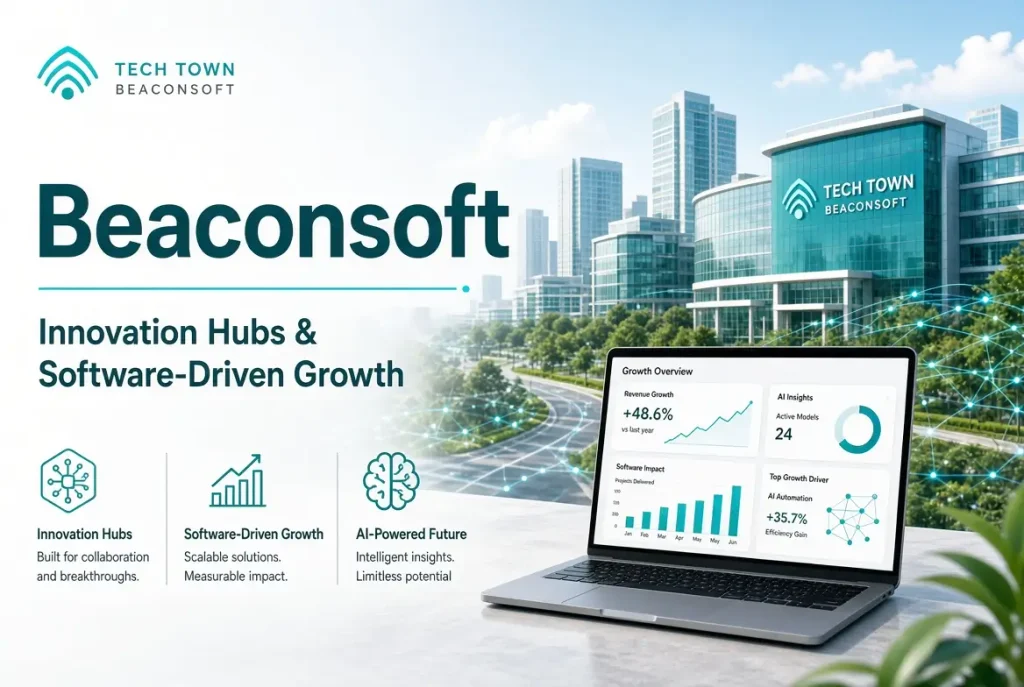
Practical Considerations When Engaging with Hubs and Tools
Tech Town Beaconsoft choosing a technology space requires more than checking the quality of the coffee or the speed of the internet. Prospective members should examine the actual composition of the community, the frequency and usefulness of programming, and the track record of companies that have worked there. Conversations with current and former participants often reveal more than official marketing materials. Alignment between the hub’s focus and the individual’s or team’s goals is essential; a space optimized for deep-tech hardware startups may offer less relevant support to a consumer software team, and vice versa.
Software selection follows a similar logic of fit. Tech Town Beaconsoft teams should begin with the specific frictions they experience most often—lost context between meetings, unreliable traffic data, slow feedback loops, or repetitive administrative work—and evaluate tools against those concrete problems. Trials, limited pilots, and clear success criteria help avoid both under-adoption and expensive commitments to platforms that look impressive in demonstrations but underperform in daily use. Integration with existing systems and the quality of ongoing support frequently matter more than marginal differences in feature lists.
Cost structures deserve careful attention in both domains. Hub membership fees, software subscriptions, and the internal time required to learn and maintain new systems all represent real expenses. The most sustainable choices are those that demonstrably improve speed, quality, or reliability enough to justify their ongoing cost Tech Town Beaconsoft.
Building Sustainable Practices Around Innovation Support
Physical hubs and software tools deliver the greatest benefit when they are treated as infrastructure rather than destinations. The goal is not to maximize time spent in a particular building or inside a particular application, but to use those resources to advance real work. Teams that maintain clear priorities, short feedback cycles, and disciplined review of what is and is not working tend to extract more value than those that accumulate memberships and subscriptions without corresponding changes in behavior.
Tech Town Beaconsoft knowledge sharing multiplies the usefulness of both kinds of support. When individuals bring insights from workshops or tool experiments back to their collaborators, the entire group advances. Hubs that encourage this kind of transmission—through internal talks, written summaries, or informal mentoring—create more durable impact than those that treat events as isolated experiences. Similarly, software that makes it easy to document decisions and share context reduces the risk that hard-won learning remains trapped with a single person.
Over longer periods, the combination of concentrated human networks and well-chosen digital tools can change the trajectory of both individual careers and entire local ecosystems. Talent becomes easier to find and develop. Ideas move more quickly from concept to testable form. Operational drag decreases. These effects are rarely dramatic in any single month, yet they compound for the people and organizations that engage consistently and thoughtfully.
The idea captured by “tech town beaconsoft” points toward a practical pairing: environments that concentrate technology talent and activity, supported by software that makes collaborative digital work more effective. Innovation hubs provide proximity, shared learning, and reduced overhead for early-stage and growing teams. Software tools handle the operational details—communication, protection of resources, analysis, automation—that allow those teams to focus on building and improving their products.
Neither element is sufficient on its own. A well-equipped space without disciplined use of supporting tools can still produce scattered effort. Powerful software without access to peers, mentors, and real-world feedback can leave teams optimizing in isolation. When the two are combined with clear priorities and regular reflection on what is working, they create conditions in which useful technology is more likely to emerge and mature. For founders, operators, and individual practitioners, the most productive path is to treat both the physical and digital layers as means rather than ends, continually aligning them with the actual work that needs to be done.
Conclusion
The idea behind tech town beaconsoft points to a practical pairing: concentrated technology environments that bring people and ideas together, supported by software tools that make collaborative digital work more efficient. Innovation hubs offer proximity, shared learning, and reduced overhead, while well-chosen software handles the operational details that keep teams moving.
Neither element works best in isolation. A strong physical community still needs reliable digital infrastructure, and powerful tools deliver more when paired with real feedback and peer insight. The greatest value appears when both are treated as supporting infrastructure rather than ends in themselves—aligned with clear priorities, tested against actual needs, and adjusted as work evolves. For founders, operators, and individual practitioners, this combination creates better conditions for turning ideas into progress.
Frequently Asked Questions
What does “tech town beaconsoft” refer to?
It combines the concept of technology innovation hubs or districts with software resources that support digital product development and operations, rather than naming a single unified organization.
What is a technology innovation hub?
It is a concentrated physical or organizational space that provides workspace, programming, mentoring, and networking opportunities for startups, growing companies, and technology practitioners.
Why do software tools matter inside these hubs?
They handle essential operational tasks—version control, communication, analytics, fraud protection, automation—so teams can focus more energy on building and improving products.
Who benefits most from innovation hubs?
Early-stage founders, growing companies seeking talent or partnerships, and independent practitioners looking for community and opportunity often gain the most.
What should someone evaluate before joining a tech hub?
The composition of the community, quality and relevance of programming, track record of past participants, and alignment with personal or team goals are all important factors.
How should teams choose supporting software?
Start with the specific frictions experienced most often, test tools against those problems, and prioritize clean integration and reliable support over long feature lists.
Can software replace the value of a physical hub?
Digital tools improve efficiency and coordination, but they do not fully substitute for the proximity, informal learning, and relationship-building that well-run hubs provide.
Are innovation hubs only useful for startups?
No. Established companies often maintain a presence for recruiting, partnership development, or specific project teams while operating core functions elsewhere.
What makes the combination of hub and software effective?
Clear priorities, short feedback cycles, and regular review of what is actually helping progress turn both resources into productive infrastructure rather than unused overhead.
How can individuals get the most value from these environments?
Engage actively with programming and peers, apply new tools to real work quickly, share useful insights with collaborators, and continuously align both physical and digital resources with current goals.
Read More:
