

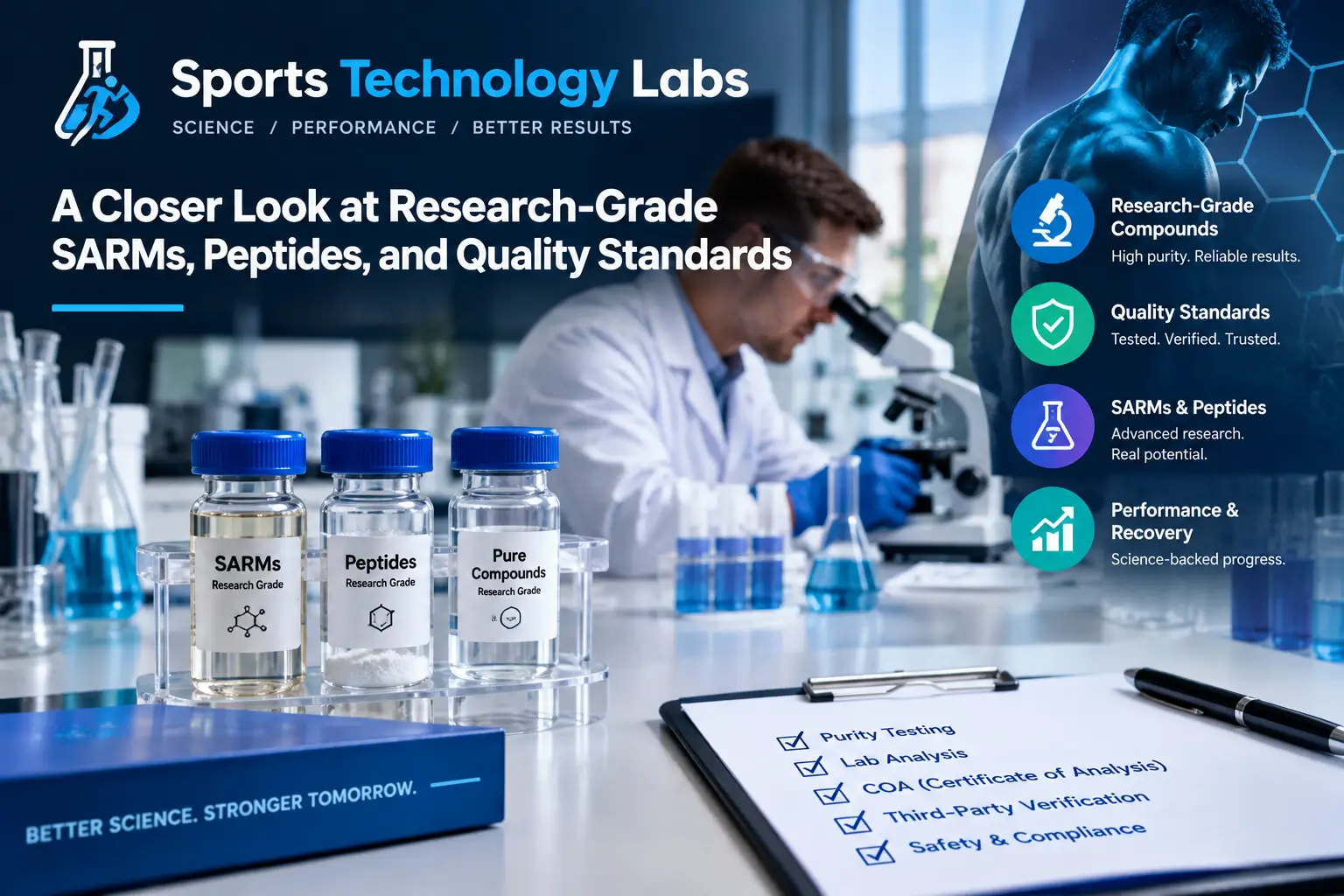
Finding reliable sources for research chemicals has never been straightforward. Many suppliers make bold claims about purity while offering little evidence that can actually be checked. Sports Technology Labs entered this space in 2019 with a different approach. Based in Shelton, Connecticut, the company focuses on supplying SARMs and peptides intended strictly for laboratory and in-vitro research. Its reputation rests on independent testing, batch-level documentation, and clear labeling that these materials are not for human use.
What stands out is the emphasis on verification. Every batch goes to accredited American laboratories for analysis. Certificates of analysis are published with enough detail that researchers can contact the testing labs themselves. This level of transparency is still uncommon in the sector. For universities, private labs, and independent researchers who need consistent materials, that difference matters. The goal of this article is to examine how Sports Technology Labs operates, what it offers, and the practical realities of working with its products.
What Sports Technology Labs Actually Does
Sports Technology Labs functions as a specialized supplier of research compounds. Its catalog centers on Selective Androgen Receptor Modulators (SARMs) and a selection of peptides. These materials are bottled in the United States and sold with the explicit condition that they are for research and development purposes only. The company does not market them as supplements, medications, or products intended for personal use.
The business model prioritizes analytical data over marketing language. Rather than relying solely on manufacturer certificates, Sports Technology Labs submits finished batches to independent labs for high-performance liquid chromatography (HPLC) and mass spectrometry confirmation. Results typically show purity levels of 98 percent or higher for SARMs. Peptides follow similar documentation practices. Each product carries a unique batch number that links directly to its certificate of analysis. Researchers can look up the specific lot they received and, if needed, verify the certificate with the testing laboratory.
This approach addresses a long-standing problem in the research chemical market. When purity is uncertain, experimental results become harder to reproduce. By making independent data available and contactable, Sports Technology Labs reduces one major source of variability. The company also uses USP-grade solvents and glass bottles with fixed glass droppers, choices designed to limit contamination risks that can occur with lower-grade packaging.
Third-Party Testing and the Push for Verifiable Quality
Independent testing forms the foundation of the company’s claims. Sports Technology Labs partners with accredited facilities such as MZ Biolabs in Arizona and Colmaric Analyticals. These labs operate under recognized standards, including GLP practices and ISO-accredited methods in relevant areas. Testing covers identity confirmation and purity quantification. Mass spectrometry helps verify molecular weight, while HPLC measures the percentage of the target compound.
What makes the process more useful than typical industry practice is accessibility. Certificates of analysis are published and include laboratory contact information. A researcher who questions a result can reach out directly rather than accepting a redacted or unverifiable document. Batch numbers ensure the certificate matches the specific material shipped. This traceability supports better experimental design and troubleshooting when results deviate from expectations.
Purity alone does not guarantee perfect research outcomes, of course. Storage conditions, handling, and experimental protocols still play large roles. Yet starting with well-characterized material removes one common variable. Many researchers who have compared vendors note that consistent documentation reduces the time spent validating incoming chemicals before experiments begin. Sports Technology Labs positions this documentation as a core part of its service rather than an optional extra.
Product Range and Research Applications
The catalog includes a range of popular SARMs along with selected peptides. Common SARMs appear alongside compounds studied for their selective activity on androgen receptors. Peptides in the lineup often include those examined in tissue repair, recovery, or related laboratory contexts. Exact availability can shift, but the emphasis remains on compounds that see regular use in research settings.
All materials carry clear research-use-only labeling. The company states that products are not intended for human consumption, therapeutic use, or any form of administration outside controlled laboratory environments. This boundary is important. It keeps the business within the research chemical category and avoids claims that would place the products under different regulatory frameworks.
Researchers choose these materials for controlled studies where purity and identity must be known with reasonable confidence. In academic or private lab settings, the ability to cite independent analytical data strengthens experimental write-ups. Some users also appreciate the U.S.-based bottling and shipping, which can simplify logistics and reduce concerns about international supply chain variability. Fast domestic shipping options, including same-day or next-day in many cases, further support time-sensitive projects.
Operations, Packaging, and Practical Considerations
Sports Technology Labs bottles its products in the United States using materials chosen to protect integrity during storage and handling. Glass bottles with fixed glass droppers replace plastic alternatives that can introduce contaminants or leach compounds over time. USP-grade PEG-400 is used as a solvent for liquid formulations where appropriate. These details may seem minor, yet they address real problems that appear when lower-quality packaging interacts with sensitive compounds.
Orders ship from the Connecticut location with tracking. Payment options typically include credit cards and cryptocurrency, with occasional discounts for certain methods. Free shipping thresholds and money-back policies appear in current offerings, though researchers should confirm the latest terms. Customer communication is handled through standard channels, and reviews often note responsive support when questions about certificates or orders arise.
Practical use requires awareness of the research-only designation. Institutions and independent researchers must follow their own compliance rules regarding acquisition, storage, and disposal of such materials. Sports Technology Labs does not provide guidance on human use because that falls outside its stated purpose. Anyone approaching the products with different intentions will find the documentation and labeling consistent with laboratory research rather than consumer applications.
Who Benefits Most and Realistic Expectations
The primary audience consists of laboratories, research institutions, and qualified individuals conducting in-vitro or analytical work. Those who need reproducible starting materials and value independent verification tend to find the offering useful. The combination of published COAs, named testing partners, and U.S. bottling appeals to buyers who have encountered inconsistent quality elsewhere.
Expectations should remain grounded. High purity reduces one source of error but does not eliminate the need for careful experimental design. Results still depend on proper technique, appropriate controls, and correct interpretation. The company’s role stops at supplying characterized research materials with supporting data. It does not offer clinical advice, dosing protocols, or any form of human application support.
For researchers comparing suppliers, the verifiable testing chain and transparent documentation provide a clear point of differentiation. When experimental reproducibility matters, the ability to confirm what was actually received carries practical weight. Sports Technology Labs has built its position around that principle since 2019, and the available information suggests it continues to operate with that focus.
Sports Technology Labs fills a specific niche in the research chemical supply chain. By prioritizing independent analysis, batch-level traceability, and clear research-only positioning, it offers materials that many laboratories find easier to incorporate into rigorous work. The value lies less in marketing claims and more in the documentation that accompanies each shipment. Researchers who need consistent, verifiable compounds will find the approach aligns with the standards required for careful scientific investigation.
Conclusion
Sports Technology Labs has built its reputation on a straightforward principle: research materials should come with evidence that can actually be checked. By sending every batch to independent American laboratories, publishing certificates that include lab contact details, and bottling products in the United States under clear research-only labeling, the company addresses a common frustration in the research chemical market. Purity claims become more meaningful when they are tied to verifiable data rather than internal paperwork alone.
The value for laboratories and independent researchers lies in reduced uncertainty. Consistent documentation, batch-level traceability, and careful packaging choices help minimize variables that can undermine experimental work. At the same time, the company maintains firm boundaries—its products are not intended for human use, and it offers no clinical guidance. That clarity is itself useful.
For anyone sourcing SARMs or peptides for legitimate laboratory purposes, the combination of independent testing, transparent certificates, and domestic operations provides a practical standard. Results will always depend on sound experimental design and proper handling, yet starting with well-characterized material remains one of the more reliable ways to support reproducible research. Sports Technology Labs continues to operate with that priority at the center of its approach.
Frequently Asked Questions
1. What is Sports Technology Labs?
Sports Technology Labs is a U.S.-based supplier of research-grade SARMs and peptides. Founded in 2019 and headquartered in Shelton, Connecticut, it focuses on high-purity materials intended strictly for laboratory and in-vitro research.
2. Are the products intended for human use?
No. All products are labeled for research and development purposes only. They are not intended for human consumption, therapeutic use, or any form of administration outside controlled research settings.
3. Does Sports Technology Labs provide third-party testing?
Yes. Every batch is tested by accredited American laboratories using methods such as HPLC and mass spectrometry. Certificates of analysis are published and include laboratory contact information so results can be verified independently.
4. What purity levels do the products typically show?
SARMs are generally tested to a minimum of 98 percent purity. Peptides follow similar high-purity standards supported by independent analysis.
5. Can I verify the certificates of analysis myself?
Yes. Certificates include batch numbers and contact details for the testing laboratories. Researchers can reach out directly to confirm the documentation matches the material received.
6. Where are the products bottled?
Products are bottled in the United States using USP-grade solvents and glass bottles with fixed glass droppers designed to minimize contamination risks.
7. Who typically buys from Sports Technology Labs?
The primary customers are research institutions, private laboratories, and qualified independent researchers who need characterized materials for controlled studies.
8. How does shipping work?
Orders ship from the Connecticut location. Domestic options often include same-day or next-day shipping, with tracking provided. Specific thresholds for free shipping may apply.
9. What payment methods are accepted?
Common options include credit cards and cryptocurrency. Occasional discounts may be available for certain payment methods.
10. Why does independent testing matter for research chemicals?
Independent testing reduces uncertainty about identity and purity. When certificates can be verified with the testing lab, researchers gain greater confidence that the material matches its stated specifications, supporting more reliable experimental results.
Read More:
