

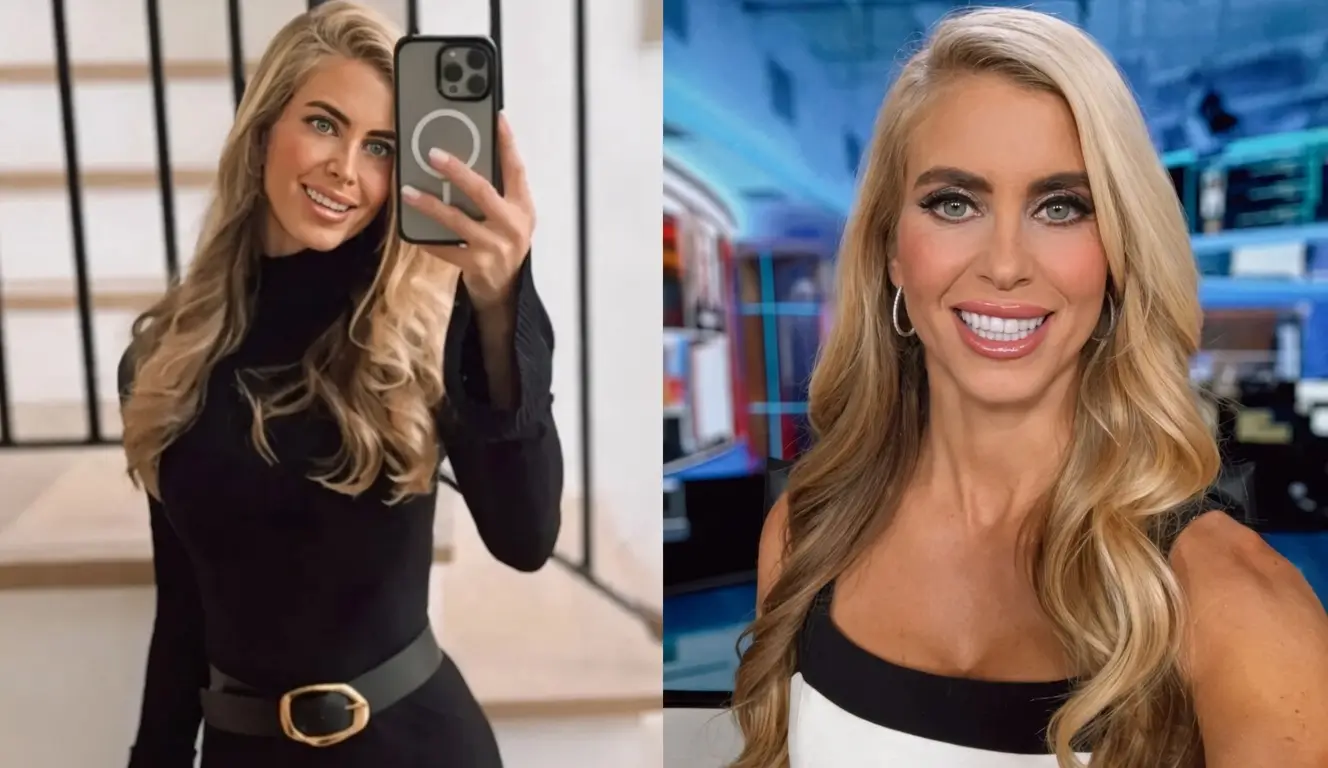
Katie Zacharia is a name that has become increasingly familiar to audiences following American politics, particularly those interested in California policy, conservative political strategy, legal analysis, and federal government communications. Her career is unusual because it has crossed several professional worlds: international law, political advocacy, television commentary, organizational leadership, and federal public affairs.
Rather than following a conventional path from law school into a single legal specialty, Zacharia has gradually built a public career around the relationship between law and politics. Her legal training has informed her political analysis, while her experience in advocacy and communications has given her a platform beyond traditional legal practice. She has appeared as a commentator on major television networks and has written about political issues through publications such as the California Globe.
Her profile expanded significantly in 2026 when she was appointed Spokesperson and Deputy Assistant Secretary for Public Affairs at the U.S. Department of Homeland Security. The appointment placed her inside one of the most politically visible federal agencies in the country. Her tenure was brief, but the experience added another significant chapter to an already multifaceted career.
Profile Summary
| Category | Details |
|---|---|
| Full Name | Katie Zacharia |
| Profession | Attorney, Legal Strategist, Political Strategist, Media Commentator |
| Education | Pepperdine University; Pepperdine Caruso School of Law |
| Law Background | International corporate law and legal advisory work |
| International Experience | Professional work associated with Beijing and international institutions |
| Political Work | Political strategy, advocacy, and campaign-related work |
| Fix California | Senior legal/advisory role; publicly identified as General Counsel |
| Media Career | Political and legal commentator |
| Television Appearances | Fox News, Newsmax, and other political programs |
| DHS Position | Spokesperson and Deputy Assistant Secretary for Public Affairs |
| DHS Year | 2026 |
| DHS Tenure | February–April 2026 |
| Reason for Leaving DHS | She cited family and travel demands, along with changes in the nature of her role |
| Husband | Tyler Zacharia |
| Children | Four children, according to public biographical information |
| Political Affiliation/Work | Associated with Republican political strategy |
| California Connection | Strong professional connection through Fix California and political advocacy |
| Writing | Political and policy commentary |
| Known For | Combining legal expertise, political strategy, media commentary, and public affairs |
| Current Public Profile | Political commentator and communications adviser |
| Wikipedia Status | No definitive dedicated Wikipedia biography currently serves as the primary reference |
| Birth Date | Not reliably established by the strongest public professional sources |
| Net Worth | No reliably verified public figure |
| Career Highlight | Serving as a senior public-affairs official at the U.S. Department of Homeland Security in 2026 |
Who Is Katie Zacharia?
Katie Zacharia is an American attorney, legal and political strategist, and media commentator. Her professional background includes international corporate law, nonprofit work, political advocacy, campaign activity, and television analysis. The California Globe describes her as a legal and political strategist and identifies her as General Counsel for Fix California, while also noting her experience with international corporate law and nonprofit organizations.
Her public career is especially connected to California politics. She has worked with Fix California, a conservative political organization associated with Richard Grenell, and has become a recognizable commentator on issues involving elections, government, public policy, and political leadership. Her television credits include appearances on programs associated with Fox News and other political networks, where she has been introduced under titles such as legal and political strategist, Republican strategist, and Fix California senior adviser.
What makes Zacharia particularly interesting is the combination of professional skills behind that public image. She is not simply a television personality who began discussing politics after becoming famous. Her career developed from formal legal education and professional legal experience before moving into political strategy and media.
That distinction helps explain why her commentary often combines legal interpretation with political strategy. A legal analyst may concentrate on what the law says, while a political strategist considers how a decision will affect voters, campaigns, institutions, and public messaging. Zacharia’s career has given her experience in both areas.
A Career Built Across Several Fields
Zacharia’s professional trajectory illustrates how lawyers can move beyond traditional legal practice. Her early international experience reportedly included work connected to corporate law in Beijing and outside counsel work involving the World Bank and International Finance Corporation. The California Globe specifically describes her as having extensive experience in international corporate law, political advocacy, and nonprofit work.
That international chapter is an unusual feature of her biography. Many political commentators build their careers entirely within domestic campaigns, government offices, journalism, or political organizations. Zacharia’s background includes experience in an international legal environment before she became a more visible figure in American political media.
Her later transition into political advocacy and television therefore represents an expansion of an existing professional foundation rather than a complete career change.
Katie Zacharia’s Education and Legal Background
Education has played a central role in Zacharia’s professional development. Public professional biographies identify her as a double alumna of Pepperdine University and Pepperdine Caruso School of Law. The California Globe describes her as a graduate of both Seaver College and Caruso School of Law at Pepperdine.
Her legal education provides an important context for understanding her later career. Law school trains students to interpret complicated rules, examine competing arguments, evaluate evidence, and communicate positions clearly. Those skills can be useful in litigation, corporate law, government, political strategy, journalism, and public affairs.
For Zacharia, the legal foundation appears to have become the thread connecting several different stages of her career. Even after moving away from conventional legal practice, she continued using the professional identity of an attorney and legal strategist when appearing in political media.
International Legal Experience
One of the more distinctive elements of Katie Zacharia‘s background is her reported international legal work in Beijing. Public professional descriptions connect her with international corporate law and outside counsel work for organizations including the World Bank and International Finance Corporation.
International legal work can demand a different perspective from domestic practice because lawyers must consider multiple regulatory environments, institutional expectations, commercial relationships, and cultural contexts. Experience in that environment can be particularly valuable for someone who later works in public policy and political communications.
Zacharia’s international experience also makes her professional story more varied than the standard political biography. Before appearing on American television, she had already developed experience involving law, institutions, and international organizations.
That background may help explain the emphasis placed on legal reasoning in her public profile. Her career has not been based solely on political messaging; it has also involved professional environments where accuracy, negotiation, and institutional understanding are essential.
Katie Zacharia and Fix California
Fix California became one of the most important organizations in Zacharia’s public career. The organization is associated with conservative political advocacy in California, and Zacharia has held senior legal and advisory responsibilities there. The California Globe currently identifies her as General Counsel and describes her as a political and legal strategist.
Her work with Fix California placed her in the middle of debates about California’s political system, elections, governance, voter participation, and conservative strategy. It also provided an environment in which her legal background could be applied directly to political objectives.
This combination of law and political advocacy is important because political organizations frequently face legal questions involving campaigns, election procedures, regulations, organizational compliance, public messaging, and government policy. Someone with legal training can approach those questions differently from a purely communications-focused strategist.
Political Strategy and Campaign Work
Zacharia has also been associated with Republican political strategy and campaign activity. Her public professional profile identifies her as a Republican strategist, and the California Globe notes campaign work that included efforts connected with Donald Trump’s 2024 presidential campaign in swing states.
Campaign strategy involves much more than appearing at rallies or writing political statements. Strategists study political environments, identify persuasive issues, evaluate candidates and opponents, develop messages, and consider how voters are likely to respond to changing events.
Zacharia’s legal background gives her political work another dimension. Election law, voting procedures, campaign regulations, and constitutional questions frequently intersect with political strategy. A strategist who understands legal constraints can approach those issues with a different set of tools.
Her work in California is especially notable because the state represents one of the most complicated political environments in the United States. California’s enormous population, diverse electorate, powerful state government, and heavily Democratic statewide politics make it a challenging environment for conservative political organizations.
Katie Zacharia’s Television and Media Career
Zacharia’s television career has helped turn her from a behind-the-scenes political professional into a recognizable public commentator. IMDb records appearances on programs including Fox & Friends, Hannity, Fox & Friends First, and other political television programs. Her credits have identified her as a legal and political strategist, Fix California senior adviser, and Republican strategist.
Her appearances demonstrate the value of combining professional expertise with communication skills. Television audiences typically do not have time for lengthy legal explanations. A commentator must understand the issue quickly, identify the central question, and explain it in language that viewers can follow.
Zacharia’s professional identity fits that format because her work has already required her to operate across law and politics. She can discuss political questions while drawing on her legal background, which gives her commentary a somewhat different starting point from that of a traditional political pundit.
Her media profile also grew during a period when political television increasingly relied on lawyers, former officials, strategists, and policy specialists. Viewers often want more than a headline; they want to understand why a government decision matters and what could happen next.
Writing and Public Commentary
Television has not been her only public platform. Zacharia has also contributed written commentary to the California Globe, where she has published political and policy-focused material. The publication’s author page identifies her as a regular Fox News and Newsmax commentator and describes her professional experience in law, advocacy, and political strategy.
Written commentary provides a different environment from television. An article allows an author to develop an argument, explain background information, and explore a subject in greater detail. For someone with a legal background, that format can be especially useful because complex political questions often require context.
Her public writing and television appearances therefore complement one another. Television provides immediacy and reach, while written commentary allows greater space for argument and explanation.
Katie Zacharia’s Role at the Department of Homeland Security
One of the most significant developments in Zacharia’s career came in February 2026, when she joined the U.S. Department of Homeland Security as a spokesperson and Deputy Assistant Secretary for Public Affairs. Axios reported the appointment as part of a change in DHS public-affairs leadership following the departure of spokeswoman Tricia McLaughlin.
The role represented a substantial change in professional responsibility. A political commentator can analyze government actions from outside an administration, while a federal spokesperson communicates from within the institution itself. The latter role requires coordination, discipline, knowledge of government policy, and the ability to respond to rapidly changing news events.
For Zacharia, the appointment brought together several strands of her previous career. Her legal education gave her analytical training, political strategy provided experience with public messaging, and television had given her extensive practice communicating complicated issues to large audiences.
The Department of Homeland Security is also one of the most closely watched federal agencies, particularly on immigration, border security, terrorism, emergency management, and homeland protection. Public-affairs officials therefore operate in an environment where statements can attract immediate national attention.
Why Her DHS Tenure Was Brief
Zacharia’s tenure at DHS lasted only several weeks. CNN reported in April 2026 that she had left the position and interviewed her as a former DHS spokesperson. During that appearance, Zacharia explained that she had gone to Washington to advocate for President Trump’s policies but that a leadership transition resulted in her being placed into a different, more desk-oriented role. She also said that the travel between California and Washington was difficult because she has four children.
Her explanation provides an important insight into the practical side of government employment. High-profile appointments can look glamorous from the outside, but federal positions may involve long hours, relocation or frequent travel, institutional changes, and responsibilities that differ from what an appointee initially expected.
Zacharia said she believed she could serve the administration more effectively by returning to media work while also being closer to her children. Her departure therefore represented less a disappearance from politics than a return to the public-facing environment where she had already established herself.
Katie Zacharia’s Family and Personal Life
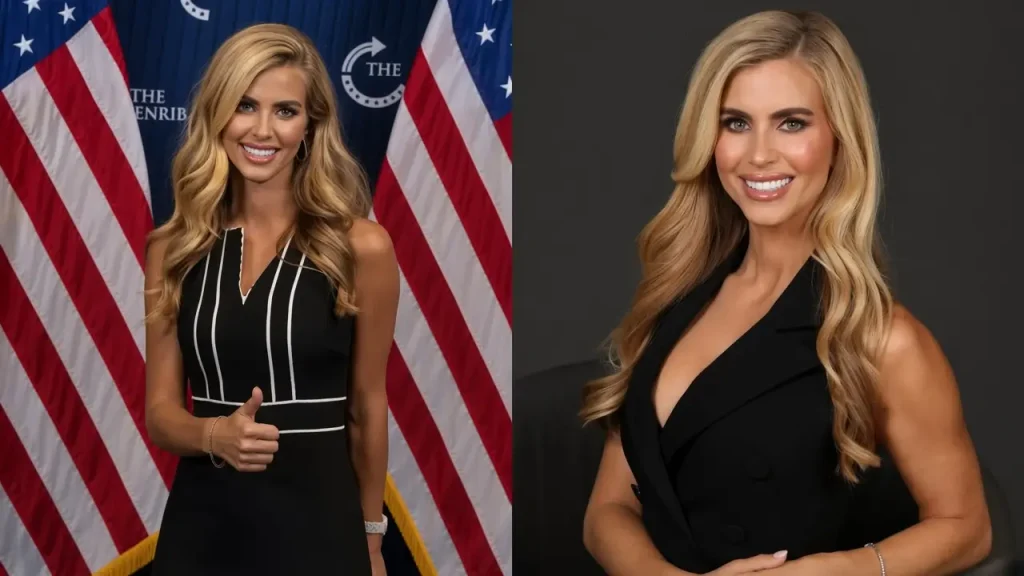
Compared with her professional career, Zacharia’s private life receives considerably less attention in reliable public sources. Public biographical information identifies Tyler Zacharia as her husband and states that they have four children. IMDb’s biography for Katie Zacharia lists her marriage to Tyler Zacharia beginning in May 2011 and identifies four children.
Her family became relevant to her professional story when she explained her decision to leave DHS. In her CNN interview, Zacharia specifically referenced her four children and the burden created by traveling between California and Washington.
That detail adds a human dimension to a career that can otherwise appear dominated by politics and professional ambition. Public figures often face decisions that require balancing demanding work with family responsibilities, and Zacharia’s departure from DHS is an example of that tension becoming part of the public record.
At the same time, many websites publish highly specific claims about her private life, including exact birth dates, residence, net worth, and other personal information. Those claims are not uniformly supported by strong sources. A responsible biography should therefore distinguish between information that is publicly documented and details that are merely repeated online.
Keeping Personal Claims in Perspective
One frequently repeated claim is that Zacharia was born on March 23, 1984. Several biography websites publish that date, but the professional sources consulted here do not independently establish it with the same level of confidence as her education and career information. Consequently, it is safer not to treat the date as definitive without a stronger primary source.
The same caution applies to financial estimates. Some websites claim that Zacharia has a particular net worth, but there is no reliable public financial disclosure establishing a precise figure. Political commentators, attorneys, advisers, and media contributors may have multiple income sources, and estimates published online are often speculative.
Her professional achievements can be discussed without guessing about private finances. The documented facts are already substantial: legal education, international legal experience, political strategy, Fix California leadership, national media appearances, and a federal public-affairs appointment.
What Makes Katie Zacharia’s Career Stand Out?
The most distinctive feature of Zacharia’s career is its breadth. She has moved between professional environments that require different kinds of expertise without completely abandoning the legal and analytical foundation established early in her career.
Her path can broadly be understood as a progression from law to international professional work, political advocacy, media commentary, and government communications. Each stage introduced a different skill set. International law required institutional and analytical discipline; political strategy required persuasion and planning; television required concise communication; government public affairs required institutional messaging and responsiveness.
That combination has made her particularly useful as a political commentator. She can approach a story through several lenses at once: What does the law say? What does the policy mean? How might politicians respond? How should the issue be explained to the public?
A Public Career Still Developing
Zacharia’s career is also relatively young compared with many established political figures, meaning her professional identity is still developing. Her 2026 DHS appointment showed that her experience had become relevant not only to political media but also to government communications.
Her return to media and advisory work after leaving DHS does not erase that government experience. Instead, it adds another perspective to her public commentary. Someone who has worked inside a federal communications office can speak about government messaging from firsthand experience in a way that an outside commentator cannot.
That may remain one of the most interesting elements of her biography in the years ahead. Whether her next chapter focuses on political strategy, television, communications, law, or a combination of these fields, her career has already demonstrated a willingness to move between institutions rather than remain confined to one professional lane.
Conclusion
Katie Zacharia has developed a distinctive career at the intersection of law, politics, media, and public affairs. Her professional background began with legal education and international legal experience before expanding into political advocacy, strategic consulting, television commentary, and organizational leadership.
Her association with Fix California became an important part of her political identity, while appearances on Fox News, Newsmax, and other programs introduced her work to a much larger national audience. In February 2026, her appointment as a spokesperson and Deputy Assistant Secretary for Public Affairs at the Department of Homeland Security marked another major step, taking her from political commentary into direct federal government communications.
Her DHS tenure was short, ending after several weeks, but Zacharia explained that the travel demands and changes in the nature of her position influenced her decision to return to media work while spending more time with her family. Her comments also confirmed that she is a mother of four, a personal detail that has become relevant to understanding her career decisions.
There is still plenty of uncertainty around some biographical details published about Zacharia online, particularly her exact age, net worth, and other private information. The strongest picture comes from her professional record rather than speculative biography pages.
What remains clear is that Katie Zacharia is more than a television commentator. She is a lawyer whose career has expanded into political strategy, advocacy, media, and government communications. That unusual combination is the central story behind her growing public profile.
FAQs
1. Who is Katie Zacharia?
Katie Zacharia is an American attorney, political strategist, legal analyst, and media commentator. She has worked in international law, political advocacy, government communications, and television.
2. Is Katie Zacharia a lawyer?
Yes. Katie Zacharia has a legal education and is publicly identified as an attorney and legal strategist. Her professional background includes international corporate law and legal advisory work.
3. Where did Katie Zacharia go to college?
Public professional biographies identify her as a graduate of Pepperdine University’s Seaver College and Pepperdine Caruso School of Law.
4. What is Katie Zacharia known for?
She is known for her work as a lawyer and political strategist, her association with Fix California, television commentary, political writing, and her brief 2026 role at the Department of Homeland Security.
5. What was Katie Zacharia’s role at DHS?
She served as Spokesperson and Deputy Assistant Secretary for Public Affairs at the U.S. Department of Homeland Security in 2026. Axios reported her appointment in February, while CNN later referred to her as a former DHS spokesperson.
6. Why did Katie Zacharia leave the Department of Homeland Security?
Zacharia said that a leadership transition changed the nature of her role and that traveling between California and Washington was difficult for her family. She said she believed returning to media work would allow her to advocate more effectively while remaining closer to her children.
7. Is Katie Zacharia married?
Yes. Public biographical information identifies Tyler Zacharia as her husband and reports that they married in May 2011.
8. How many children does Katie Zacharia have?
Public biographical information identifies Katie Zacharia and Tyler Zacharia as parents of four children. Zacharia herself also referred to having four children during her CNN interview about leaving DHS.
9. What is Katie Zacharia’s connection to Fix California?
Zacharia has held senior legal and advisory responsibilities at Fix California and has been identified as its General Counsel. The organization has been an important part of her political advocacy and California-focused strategy work.
10. What does Katie Zacharia do now?
Her public career continues to involve political commentary, legal analysis, and communications work. Following her departure from DHS, professional listings continued to identify her with media and senior communications advisory work.
You May Read Also:
