

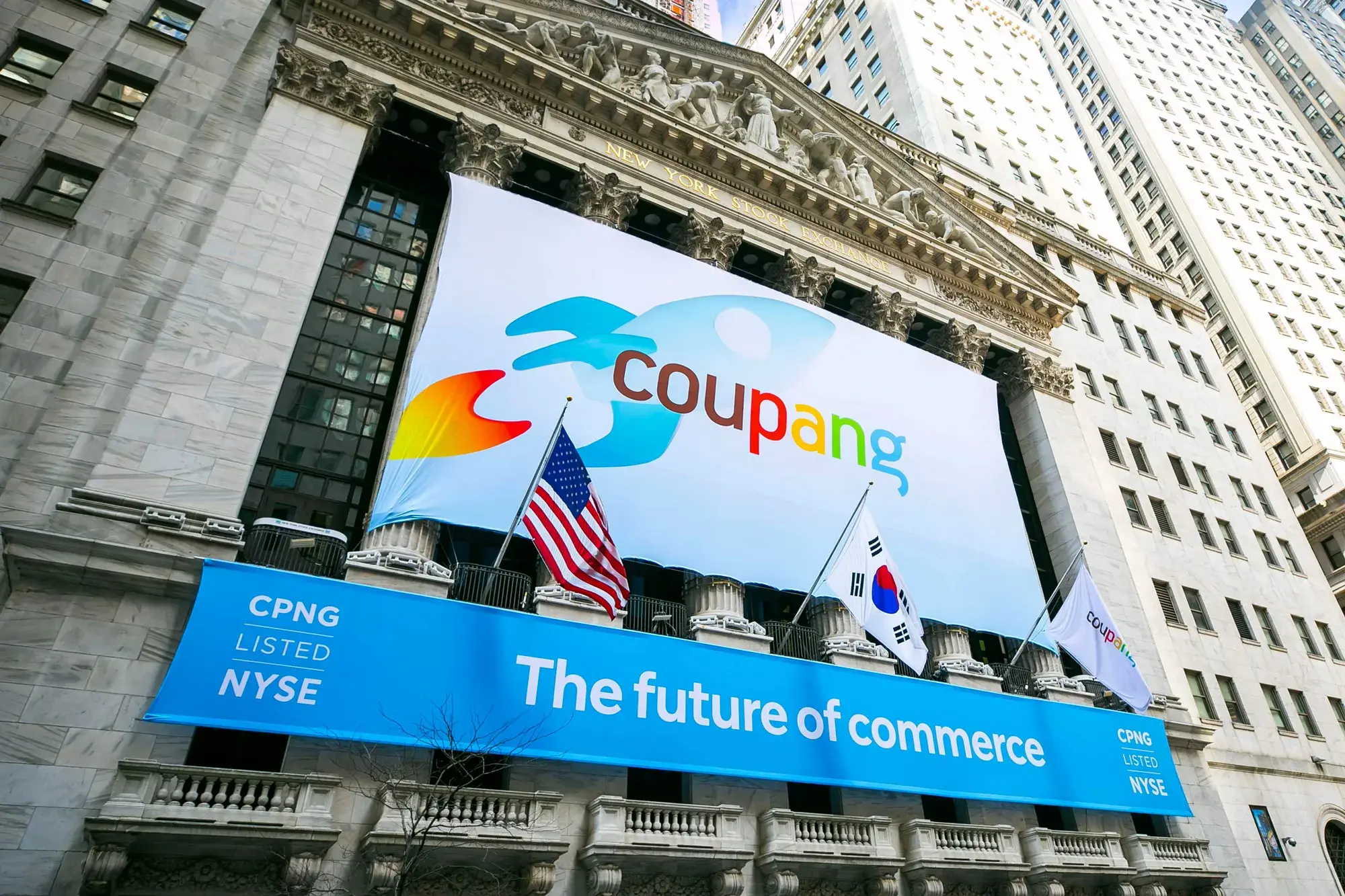
Coupang has become one of the most recognizable names in modern commerce, particularly because it approached online shopping as much more than a digital storefront. Instead of simply connecting customers with products, the company built an extensive system around fulfillment, warehousing, delivery, payments, food, entertainment, and customer service. That approach helped Coupang establish a particularly strong position in South Korea and gave it a platform from which to expand into additional markets and industries.
The company was founded in 2010 by Bom Kim, who remains its chief executive officer and chairman. Coupang’s origins are closely associated with the United States, but South Korea became the market where its distinctive commerce and logistics model developed at scale. Today, the company describes itself as a U.S.-based technology company headquartered in Seattle and listed on the New York Stock Exchange. Its businesses extend beyond conventional retail into restaurant delivery, streaming, financial services, luxury commerce through Farfetch, and international operations.
What makes Coupang particularly interesting is the way it combines technology with physical infrastructure. A customer may see only a simple product page and a delivery estimate, but behind that experience sits a network of fulfillment centers, inventory systems, transportation operations, software, automation, and last-mile delivery capabilities. Coupang says it has invested billions of dollars into this infrastructure and operates more than 100 fulfillment and logistics centers.
That investment has created a business where convenience is not treated as an extra feature. It is the central product. Customers can order everyday essentials, electronics, groceries, restaurant meals, entertainment services, and other products through an increasingly interconnected ecosystem. The result is a company that offers an interesting example of how commerce can evolve when logistics, technology, and customer expectations are designed together rather than separately.
How Coupang Started and Developed Its Distinctive Business Model
Coupang’s story began in Boston, where Bom Kim was studying at Harvard Business School. Rather than following a conventional career path, Kim left school to pursue his idea for an online shopping business. Coupang was incorporated in Delaware in 2010, establishing the foundation for what would eventually become a major U.S.-based technology company with a particularly powerful presence in Asia.
The company’s early development took place against the backdrop of rapidly changing consumer behavior. South Korea was already highly connected, densely populated, and comfortable with digital services, making it an unusually attractive environment for experimenting with new forms of e-commerce. Coupang recognized that simply offering products online was not enough. The company needed to solve the less glamorous but far more difficult problems involving inventory, storage, transportation, delivery speed, and returns.
This philosophy eventually produced what became one of Coupang’s defining competitive advantages: an integrated commerce and logistics network. Rather than depending entirely on outside infrastructure, Coupang invested heavily in its own fulfillment capabilities and delivery operations. The company explains that its network combines physical infrastructure with software, artificial intelligence, machine learning, and automated systems to predict demand, position products closer to customers, and route orders efficiently.
The significance of that strategy becomes clearer when considering a typical online order. A customer does not want to think about where an item is stored, which warehouse should process it, which vehicle should transport it, or how the final delivery route is calculated. They simply want the product to arrive when promised. Coupang built much of its business around making those complicated processes invisible to the customer.
Rocket Delivery and the Logistics System Behind Coupang
Rocket Delivery is arguably the service most closely associated with Coupang’s identity. The concept is straightforward: make delivery so fast and reliable that customers begin to treat online shopping as a natural extension of visiting a nearby store. Coupang says more than 99% of its Rocket Delivery customer orders in Korea arrive the same day or the next day, with many orders reaching customers within hours.
This level of speed requires considerably more than a fleet of delivery vehicles. Products must be stocked in strategically positioned facilities before an order is placed. Demand must be estimated accurately enough to reduce unnecessary inventory while still keeping popular products available. Orders must be picked and packed efficiently, and transportation routes must be continuously coordinated. Coupang’s investment in fulfillment centers and technology is therefore central to the company’s customer proposition rather than simply an operational expense.
The model also changes consumer behavior. When delivery becomes extremely predictable, customers may become comfortable ordering smaller and more frequent purchases. A household does not necessarily need to wait until the weekend to visit a supermarket for every item. A missing kitchen product, household essential, personal-care item, or electronic accessory can be ordered with the expectation that it will arrive quickly.
Coupang has also expanded the same basic logistics philosophy into other categories. Rocket Fresh focuses on groceries and fresh food, while restaurant delivery services connect consumers with restaurants. Its Rocket Overseas business brings international products to customers in Korea and Taiwan. The company’s own description of its services shows how it increasingly treats logistics as a platform that can support multiple types of commerce.
The reach of Rocket Delivery is also extending beyond Korea. Coupang says its service currently covers approximately 70% of Taiwan’s geography, with next-day delivery available seven days a week. That expansion illustrates an important part of the company’s strategy: take the infrastructure and operating knowledge developed in Korea and determine where it can be adapted successfully to other markets.
Coupang’s Expanding Ecosystem: Food, Streaming, Payments and Farfetch
One of the most interesting aspects of Coupang is that the company no longer fits neatly into the traditional definition of an online retailer. Its ecosystem includes Eats for restaurant delivery, Coupang Play for video and entertainment, Coupang Pay for financial services, Rocket Fresh for groceries, and Farfetch for luxury fashion. The company also operates Rocket Now in Japan and maintains international commerce activities.
The logic behind this expansion is relatively easy to understand. Once a company has a large base of consumers, a sophisticated application, payment infrastructure, logistics capabilities, and a trusted brand, those assets can potentially support additional services. A person who already uses for household shopping may find it convenient to use the same ecosystem for restaurant meals, entertainment, groceries, or payments.
Farfetch is particularly significant because it represents Coupang’s move into a very different part of commerce. acquired Farfetch in 2024, bringing a global luxury marketplace into its corporate portfolio. Farfetch serves customers across more than 190 markets and connects shoppers with a large network of luxury brands, boutiques, and department stores.
That acquisition also broadens the meaning of Coupang’s global strategy. The company is not attempting to export only a Korean online shopping experience. Instead, it is assembling a portfolio of commerce-related businesses that can reach customers and merchants across different regions and categories. Luxury fashion, groceries, restaurant meals, general merchandise, financial services, and entertainment all have different economics, but they can share certain technology and customer relationships.
Coupang’s private-label operations add another layer to the model. Its Coupang Private Label Brands business develops products based on customer demand and market information, with brands covering areas such as fresh food, household and pet products, health and beauty, and home and lifestyle. The company says these products are supported by optimized supply chains and direct relationships with manufacturers.
This approach allows Coupang to participate in more than the role of marketplace intermediary. In some categories, it can influence product development, sourcing, pricing, inventory, fulfillment, and customer experience. That creates additional opportunities but also means the company has to manage a much more complicated business than a conventional online marketplace.
Technology, Artificial Intelligence and the Economics of Coupang
Technology is deeply embedded in Coupang’s operating model. The company uses artificial intelligence and machine learning to forecast demand and determine where products should be positioned within its fulfillment network. It also uses software to manage delivery routes and coordinate large volumes of orders. Coupang has described its technology infrastructure as an important mechanism for reducing the traditional trade-offs between selection, speed, and cost.
For consumers, these systems may appear almost invisible. A shopper sees product recommendations, availability information, an estimated arrival time, and eventually a delivered package. Behind those simple interactions are thousands of decisions involving inventory allocation, warehouse operations, delivery capacity, customer demand, and transportation.
Scale is particularly important. In its 2025 reporting, generated approximately $34.5 billion in total net revenue, compared with about $30.3 billion in 2024. Its 2025 net income attributable to stockholders was approximately $208 million.
The company’s latest reported quarter provides another useful picture of its current position. For the second quarter of 2026, reported $8.856 billion in net revenue, up 4% year over year on a reported basis and 10% on a constant-currency basis. Product Commerce active customers reached 24.7 million, an increase of 3% from the same quarter a year earlier.
At the same time, the numbers show that growth does not automatically translate into simple profitability. reported an operating loss of $556 million for the quarter, although the company said approximately $410 million of that figure related to certain administrative fines in Korea. Adjusted EBITDA was $163 million, compared with $428 million a year earlier.
Those figures demonstrate the complexity of running a business at Coupang’s scale. Maintaining warehouses, transportation systems, technology, employees, inventory, customer benefits, and new businesses requires significant investment. The company’s challenge is not merely to increase sales but to make the overall ecosystem increasingly efficient as it grows.
Coupang’s Global Expansion and the Road Ahead
Coupang’s ambitions now extend far beyond its original Korean e-commerce base. The company says it serves customers in more than 190 countries and territories through its various businesses, while its major consumer operations remain concentrated in markets where it can build distinctive commerce and logistics capabilities. Its 2026 corporate materials describe the company as a Fortune 150 technology company with operations spanning retail, restaurant delivery, video streaming, fintech, and luxury commerce.
International expansion, however, is rarely as simple as copying a successful model from one country into another. Consumer habits differ. Delivery infrastructure varies. Labor costs and regulations are different. Competition can be intense, and customer expectations may not be identical. therefore has to determine which parts of its operating system can be transferred and which must be adapted to local conditions.
Taiwan offers one example of that approach. has expanded Rocket Delivery there and says its service reaches approximately 70% of the country’s geography. Japan is another area of activity, particularly through Rocket Now, while Farfetch gives the company exposure to a much broader international customer base.
The company’s position was further highlighted in 2026 when moved to No. 132 on the Fortune 500 list. The company reported $34.5 billion in 2025 revenue, representing a 14% increase from the previous year.
The more important question is what can build from that scale. Its future could depend on whether it can successfully balance investment with profitability while continuing to improve customer convenience. Developing offerings such as food delivery, entertainment, fintech, international commerce, and luxury fashion provide additional avenues for growth, but they also bring their own costs and competitive pressures.
Another important consideration is sustainability. A delivery network that moves millions of products quickly can create environmental challenges, particularly around packaging and transportation. Coupang has highlighted initiatives such as changes to fresh-food packaging and reusable delivery bags as part of its efforts to reduce waste.
For Coupang, the next phase is therefore likely to be about refinement as much as expansion. The company has already demonstrated that it can build enormous logistics infrastructure and attract millions of active customers. The harder task is making that infrastructure increasingly productive while preserving the fast, convenient experience that helped establish its reputation.
Conclusion
Coupang has grown from a startup founded in 2010 into a large technology and commerce company with a remarkably broad operating model. Its strongest achievement may not be any single service, but the integrated system connecting online retail, fulfillment, delivery, payments, groceries, restaurants, entertainment, international commerce, and luxury fashion.
Rocket Delivery remains at the heart of the company’s identity because it demonstrates the central idea behind the business: customers value convenience most when complicated logistics disappear from their view. Coupang invested heavily in making that possible, combining physical facilities with software, automation, artificial intelligence, and a large delivery network.
Its recent financial results show both the scale of the opportunity and the difficulty of managing it. Revenue and active customers continue to grow, while profitability remains influenced by substantial investment, operating costs, international expansion, and unusual expenses.
Coupang’s future will ultimately depend on how effectively it can turn its infrastructure and customer relationships into durable, profitable growth. If it continues to improve efficiency while expanding carefully into new services and markets, the company could remain one of the most interesting examples of technology-driven commerce for years to come.
Frequently Asked Questions
1. What is Coupang?
Coupang is a U.S.-based technology and commerce company best known for its e-commerce operations and fast delivery services in South Korea. Its businesses now include retail, groceries, restaurant delivery, streaming, fintech, international commerce, and luxury fashion through Farfetch.
2. Who founded Coupang?
Coupang was founded by Bom Kim in 2010. Kim remains the company’s chief executive officer and chairman of its board.
3. Where is Coupang headquartered?
Coupang is headquartered in Seattle, Washington. Although the company has U.S. corporate roots, South Korea remains a central market for its commerce and logistics operations.
4. What is Rocket Delivery?
Rocket Delivery is Coupang’s signature fast-delivery service. In Korea, Coupang says more than 99% of Rocket Delivery customer orders are delivered the same day or the following day, with many arriving within hours.
5. Does Coupang only operate in South Korea?
No. Coupang has expanded its operations internationally. Its businesses serve customers in multiple markets, with activities in Korea, Taiwan, Japan, and more than 190 countries and territories through businesses such as Farfetch.
6. What is Coupang Eats?
Coupang Eats is Coupang’s restaurant delivery service in South Korea. It connects customers with a wide range of restaurants and uses Coupang’s delivery and technology capabilities to manage ordering and delivery.
7. What is Rocket Fresh?
Rocket Fresh is Coupang’s grocery and fresh-food delivery service. It provides products such as produce, meat, seafood, dairy, flowers, and other everyday groceries, with rapid delivery available in Korea.
8. Does Coupang own Farfetch?
Yes. Farfetch became part of Coupang following its acquisition in 2024. Farfetch operates as a global luxury fashion marketplace connecting customers with brands, boutiques, and department stores.
9. Is Coupang a profitable company?
Coupang has reported profitable periods, but profitability can fluctuate. In 2025, the company reported approximately $208 million in net income attributable to Coupang stockholders. In the second quarter of 2026, however, it reported a net loss attributable to stockholders of $570 million, with the company identifying approximately $410 million in certain administrative fines as a significant factor.
10. What makes Coupang different from traditional online retailers?
Coupang’s biggest distinction is its integrated approach to commerce and logistics. Instead of treating delivery as a separate final step, the company has built fulfillment centers, inventory systems, software, automation, and last-mile delivery capabilities around the customer experience. That infrastructure allows it to compete heavily on speed, selection, and convenience.
You May Read Also:
