

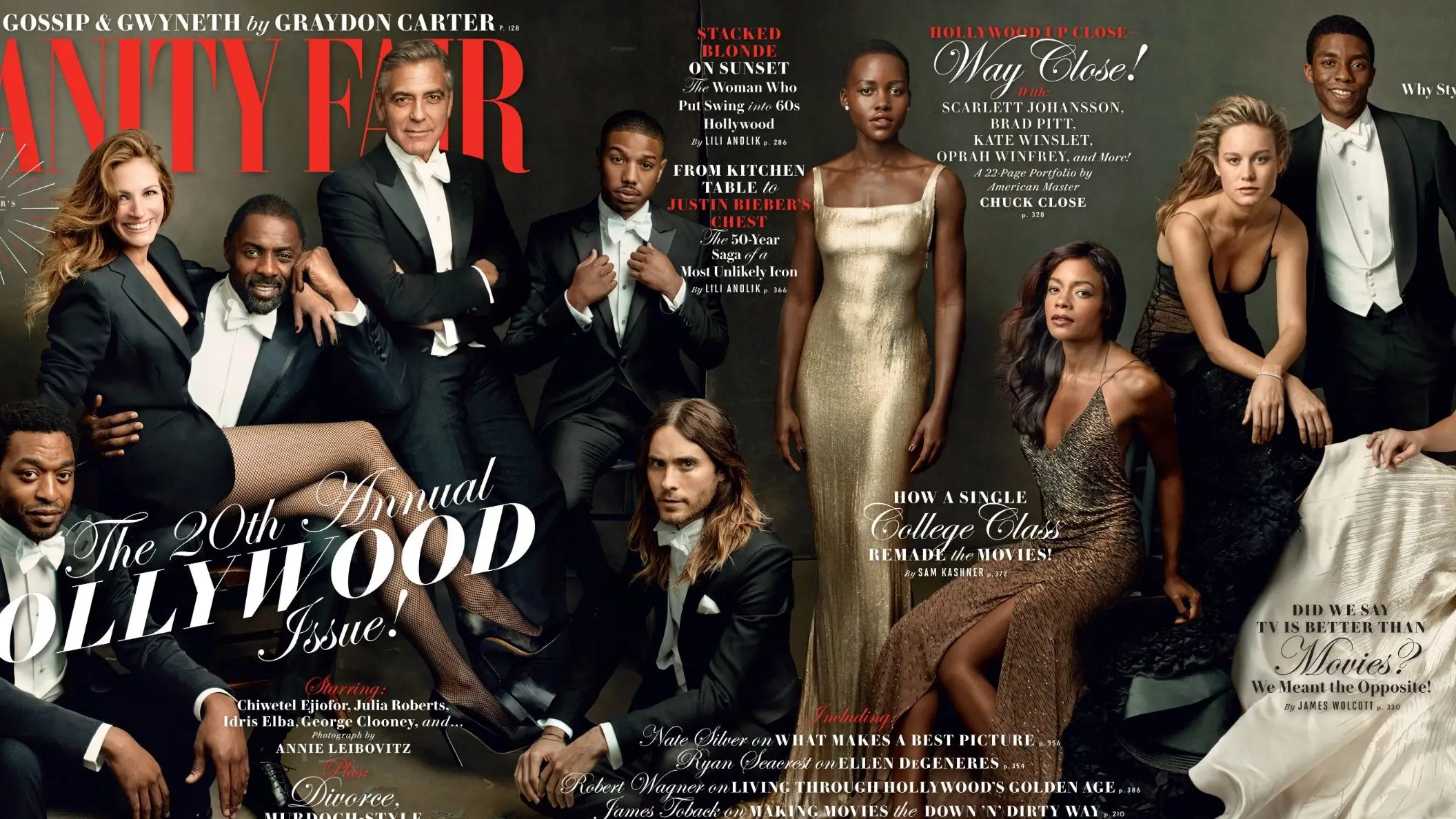
Introduction:
Few magazines have managed to sit so comfortably at the intersection of celebrity, politics, culture, fashion, and serious journalism as Vanity Fair Magazine. Its name has become associated with glamorous covers, revealing interviews, lavish photography, ambitious profiles, and stories about the people who shape public conversation. Yet reducing the publication to celebrity culture would miss much of what has made it distinctive. Behind the famous portraits and Hollywood features is a magazine with a long, complicated history and a reputation for treating popular culture as something worthy of serious examination.
Vanity Fair has also developed a visual identity that is almost as recognizable as its journalism. A single cover can become a cultural talking point, while an in-depth profile can generate discussion far beyond the magazine’s readership. Actors, musicians, political figures, business leaders, artists, athletes, and other influential personalities have all appeared within its pages. The result is a publication that often feels like a snapshot of a particular moment in American and international culture.
Understanding Vanity Fair means looking beyond the glossy surface. Its story involves changing publishing habits, evolving ideas about fame, shifting political conversations, and the transformation of magazines themselves. From its early beginnings in the early twentieth century to its modern digital presence, Vanity Fair has repeatedly reinvented the way it tells stories about influential people and the society around them.
Profile summary
| Feature | Vanity Fair Magazine |
|---|---|
| Magazine Name | Vanity Fair |
| Founded | 1913 |
| Modern Relaunch | 1983 |
| Publisher | Condé Nast |
| Main Focus | Culture, entertainment, politics, fashion, business, and society |
| Known For | Celebrity profiles, investigative journalism, interviews, photography, and cultural commentary |
| Popular Subjects | Actors, musicians, politicians, artists, business leaders, and other influential figures |
| Photography Style | High-end portraiture, fashion photography, and editorial visual storytelling |
| Major Coverage Areas | Hollywood, politics, fashion, arts, media, business, and social issues |
| Print & Digital | Available through both traditional magazine publishing and digital media |
| Editorial Style | Sophisticated, narrative-driven, analytical, and visually focused |
| Target Audience | Readers interested in celebrity, culture, current affairs, fashion, and influential personalities |
| Notable Strength | Combining glamorous presentation with serious journalism |
| Modern Identity | A major cultural publication connecting fame, power, entertainment, and society |
The History and Evolution of Vanity Fair Magazine
The history of Vanity Fair stretches back much further than the modern magazine most readers recognize. The original publication was launched in the United States in 1913, when publisher Condé Nast combined existing publishing interests with a new vision for a sophisticated audience. The magazine developed a reputation for covering theater, society, literature, art, and fashion, attracting readers interested in the cultural life of the period. Writers and artists associated with the publication helped establish an editorial environment where entertainment and serious cultural commentary could coexist.
The original version eventually ceased publication during the economic difficulties of the 1930s. For decades, the name remained largely dormant as a major magazine title. Its eventual revival became one of the most significant developments in modern American magazine publishing. In 1983, Vanity Fair was relaunched under Condé Nast, with British editor Tina Brown playing a major role in shaping its identity. Brown understood that the magazine needed to be glamorous without becoming superficial. She helped create a publication that could place Hollywood stars, political figures, intellectuals, and cultural controversies within the same editorial universe.
That relaunch established many of the characteristics people associate with Vanity Fair today. Long-form journalism became a central feature, but so did sophisticated photography and memorable visual presentation. Instead of separating serious journalism from entertainment, the magazine often treated them as connected parts of the same cultural landscape. A Hollywood actor could be examined through the lens of fame and power, while a political figure could be presented through personality, ambition, and public image.
From Print Institution to Modern Media Brand
As magazine publishing changed, Vanity Fair adapted rather than remaining exclusively dependent on traditional print readership. The growth of the internet introduced new possibilities for publishing interviews, photographs, videos, investigations, cultural commentary, and entertainment coverage. Digital readers could encounter stories through websites, social platforms, video content, and other formats that did not exist when the magazine was relaunched in the 1980s.
This transition also changed the speed of cultural journalism. A monthly magazine traditionally had time to develop elaborate stories and photography, whereas digital publishing demanded more frequent updates. Vanity Fair had to preserve its distinctive voice while responding to a media environment where audiences increasingly consume information through phones and computers. Its continued relevance has depended partly on maintaining the sense that a Vanity Fair story is not simply another piece of entertainment coverage but an editorially packaged cultural event.
What Makes Vanity Fair Magazine Different?
Vanity Fair Magazine One of the strongest characteristics of Vanity Fair is its ability to combine glamour with substance. The magazine has long understood that readers are interested not only in what famous people do but also in why their careers, personalities, relationships, controversies, and decisions matter. A profile can therefore begin with a celebrity and expand into a discussion about Hollywood, politics, wealth, social expectations, or changing cultural attitudes.
That approach gives the publication considerable flexibility. One issue may feature an actor on the cover while exploring a major film or television project, while another might focus on political developments, business power, artistic movements, or social debates. The magazine’s editorial identity is broad enough to accommodate different subjects without completely losing its recognizable personality. This mixture is a major reason Vanity Fair has remained culturally prominent even as specialized publications have multiplied.
Another defining feature is its commitment to visual storytelling. Vanity Fair photography is often highly produced, carefully styled, and conceptually designed rather than being simple publicity photography. Portraits are frequently created to communicate something about the subject’s public image. Lighting, clothing, setting, composition, and facial expression can all contribute to the story. In some cases, the photograph becomes so memorable that it takes on a life of its own outside the original article.
The Art of the Celebrity Profile
Celebrity profiles are particularly important to the magazine’s identity. A strong Vanity Fair profile typically attempts to move beyond the familiar biography that readers may already know. Instead of simply listing career achievements, the writer may explore contradictions in the subject’s personality, changes in their career, private ambitions, professional conflicts, or relationships with fame.
This style works because celebrity itself is treated as a subject worth investigating. Vanity Fair Magazine Fame affects how people behave, how journalists report on them, and how audiences interpret their actions. A successful profile can reveal the distance between a public persona and a more complicated private reality without reducing the person to either a hero or a villain. That complexity is one of the publication’s most recognizable editorial qualities.
Vanity Fair Covers and Their Cultural Impact
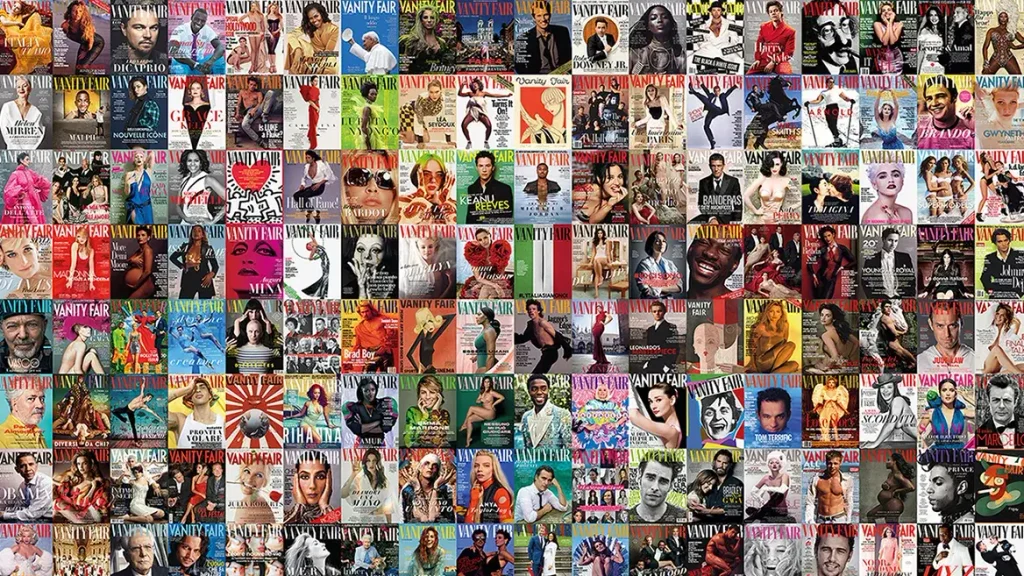
Vanity Fair covers have become an important part of the magazine’s identity. A cover is more than a promotional image; it can establish the tone of an issue and communicate what the publication believes is culturally significant at a particular moment. The magazine has frequently used prominent actors, musicians, political figures, athletes, and other public personalities to create covers designed to attract attention while also telling a visual story of Vanity Fair Magazine.
Some covers become especially memorable because they capture an unusual combination of celebrity, controversy, fashion, and cultural conversation. Photography can transform a familiar public figure into something unexpected, making readers reconsider how they see that person. The most effective covers create curiosity before the reader even reaches the accompanying article.
The magazine’s photography has also contributed to a broader tradition of celebrity portraiture. Instead of treating famous individuals merely as recognizable faces, photographers working with Vanity Fair have often approached them as subjects for carefully constructed visual narratives. This gives the publication a distinctive relationship with fashion photography and portrait art.
Why the Cover Still Matters
Vanity Fair Magazine covers have faced serious competition from digital headlines and social-media posts, but a well-designed cover still carries symbolic value. A cover communicates selection. It tells readers that this particular person, event, or subject deserves attention at this particular time. For a publication like Vanity Fair, that editorial choice can influence how a celebrity or cultural issue is discussed.
The cover also contributes to the historical record. Years later, readers may look back at an old Vanity Fair issue and immediately associate its cover with the cultural climate of that period. Fashion trends, political debates, celebrity status, photography styles, and public attitudes can all be reflected in a single image.
Journalism, Politics, Fashion, and Popular Culture
Vanity Fair Magazine is frequently associated with entertainment, but its editorial range extends considerably further. Politics has been an important part of its journalism, particularly when political power intersects with celebrity, wealth, media, or American culture. Political stories in the magazine often focus on personalities and institutions rather than treating politics solely as a sequence of policy announcements.
This personality-driven approach can make complicated subjects accessible to general readers. A political profile may examine a person’s background, ambitions, relationships, public image, and private motivations alongside their formal responsibilities. The result is journalism that treats politics as both an institutional process and a human drama.
Fashion is another major part of Vanity Fair’s cultural identity. Its photography frequently intersects with fashion, film, music, and celebrity, creating elaborate visual presentations that would be difficult to reproduce in a straightforward news publication. Clothing can become part of the storytelling rather than simply decoration.
Where Entertainment Meets Serious Reporting
One reason Vanity Fair Magazine has maintained its distinctive place in magazine culture is its willingness to blur conventional boundaries. Entertainment is not isolated from politics, and fashion is not isolated from social issues. Celebrities increasingly influence political conversations, while politicians carefully manage their public images through media appearances. Business leaders become public personalities, and artists often participate directly in cultural debates.
The magazine’s coverage works particularly well when these categories overlap. A story about a film industry dispute, for example, may also involve labor, money, corporate control, artistic freedom, and celebrity influence. A profile of a political personality may involve television, social media, branding, and public relations. Vanity Fair has built much of its identity around examining precisely these intersections.
The Writers, Editors, and Storytelling Tradition Behind Vanity Fair
A magazine’s reputation ultimately depends on more than famous covers. Its writers and editors determine how subjects are investigated, framed, and presented. Vanity Fair Magazine has attracted prominent journalists, essayists, critics, photographers, and cultural commentators throughout its modern history. Their work has helped establish the publication’s reputation for ambitious profiles and narrative journalism.
Long-form writing requires patience. A good profile cannot be created simply by collecting quotations and career milestones. Writers need to understand the subject’s background, professional environment, relationships, contradictions, and place within a larger story. Reporting may involve interviews with the central figure as well as colleagues, friends, competitors, experts, and other people who can provide context.
The magazine’s strongest stories therefore tend to feel larger than their immediate subjects. A profile of one actor can become a story about the changing film business. An article about a political personality can reveal tensions inside a political movement. A feature about fashion can explore questions of identity, wealth, creativity, and social status.
The Value of Narrative Journalism
Vanity Fair Magazine Narrative journalism is particularly suited to subjects involving fame and power because facts alone do not always explain influence. Readers may already know where someone works, what movies they have made, or what position they hold. What they often do not know is how that person operates, how others respond to them, or what pressures shape their decisions.
A carefully reported narrative can provide that missing context. Vanity Fair Magazine can show how events unfolded, introduce competing perspectives, and allow readers to understand a personality without relying entirely on promotional material. That distinction is especially valuable when writing about people whose public images are carefully managed.
Vanity Fair Magazine in the Digital Age
The digital transformation of media has changed how readers encounter magazines. A traditional print issue arrives as a finished package, while digital publishing allows individual stories to circulate independently. Readers might encounter a Vanity Fair interview through a social-media post, watch a related video, read an excerpt from a feature, or discover an older article through online searches.
This fragmented consumption has advantages and challenges. Digital platforms allow stories to reach audiences far beyond traditional Vanity Fair Magazine subscribers. They also make multimedia storytelling possible, allowing text, photography, video, and interactive features to work together. At the same time, digital media is crowded with competing sources of entertainment and information, making it harder for any single publication to command sustained attention.
Vanity Fair Magazine’s challenge is therefore not simply surviving the decline of traditional print. It is preserving the qualities that make the brand recognizable while communicating through formats that encourage faster and more fragmented consumption.
The Future of a Legacy Magazine
The future of Vanity Fair Magazine will likely depend on its ability to continue making cultural moments feel significant. The publication does not need to cover every event or personality to remain influential. Its strength lies in selecting subjects that reveal something larger about the culture around them.
That may mean increasingly combining traditional reporting with video, podcasts, photography, social content, and other forms of storytelling. Yet the fundamental appeal remains surprisingly traditional: readers want compelling people, meaningful stories, beautiful images, and reporting that offers something beyond the obvious.
Vanity Fair Magazine with a century-long history has the advantage of perspective. Vanity Fair can look at contemporary celebrity culture while understanding that fame, wealth, politics, fashion, and social status have always influenced one another. That historical awareness gives its journalism an opportunity to be more than momentary commentary.
Conclusion
Vanity Fair Magazine has survived because it has never been merely a magazine about famous people. Its deeper subject is culture itself: how power operates, how fame is created, how public personalities are constructed, and how entertainment, politics, fashion, art, and business continually influence one another.
From its early twentieth-century origins to its influential modern relaunch and digital evolution, Vanity Fair has repeatedly adapted to changing audiences. Its distinctive combination of ambitious journalism and sophisticated visual storytelling has given it an identity that remains recognizable even as the media landscape changes around it.
The most enduring quality of Vanity Fair is its curiosity. Whether examining a Hollywood star, political personality, cultural controversy, artist, or major social trend, the publication’s best work encourages readers to look beneath the surface. That ability to turn recognizable names and familiar subjects into deeper cultural stories is what has allowed Vanity Fair to remain an important part of magazine journalism.
Frequently Asked Questions
1. What is Vanity Fair Magazine?
Vanity Fair Magazine is a prominent American magazine covering entertainment, culture, politics, fashion, business, and influential personalities. It is particularly known for long-form journalism, celebrity profiles, investigative features, and distinctive photography.
2. When was Vanity Fair Magazine first published?
The original Vanity Fair was launched in the United States in 1913. That version eventually ended publication during the 1930s. The title was later revived and relaunched as a major modern magazine in 1983.
3. Who helped relaunch modern Vanity Fair?
Tina Brown played a major role in shaping the modern Vanity Fair after its 1983 relaunch. Her editorial approach helped establish the combination of serious journalism, celebrity culture, politics, fashion, and sophisticated photography associated with the publication.
4. What is Vanity Fair best known for?
Vanity Fair is best known for celebrity and political profiles, long-form journalism, cultural commentary, fashion photography, major interviews, and memorable magazine covers.
5. Does Vanity Fair only cover celebrities?
No. Although celebrities are an important part of its identity, the magazine also covers politics, business, art, fashion, society, technology, and major cultural issues. Many of its stories examine the relationship between these areas.
6. Why are Vanity Fair covers so famous?
The magazine invests heavily in portrait photography and visual presentation. Its covers often feature influential personalities in carefully designed settings, making them visually distinctive and sometimes culturally memorable.
7. Is Vanity Fair a fashion magazine?
Fashion is an important part of Vanity Fair, but it is not exclusively a fashion magazine. Its editorial coverage is considerably broader and includes entertainment, politics, culture, business, and journalism.
8. Does Vanity Fair publish investigative journalism?
Yes. Alongside profiles and cultural features, Vanity Fair has published serious reporting and investigative stories. Its journalism frequently examines powerful individuals, institutions, controversies, and important cultural developments.
9. How has Vanity Fair changed with digital media?
Vanity Fair has expanded beyond traditional print publishing into digital articles, photography, video, social media, and other formats. This allows individual stories to reach readers independently of the monthly print issue.
10. Why does Vanity Fair remain culturally influential?
Its influence comes from the combination of strong storytelling, recognizable personalities, sophisticated photography, and coverage of subjects where celebrity, politics, culture, fashion, and power intersect. That editorial combination gives the magazine a distinctive identity.
You May Read Also:
